
Yugabyte targets the missing memory and knowledge layer for enterprise AI agents
SiliconANGLE News · View original source
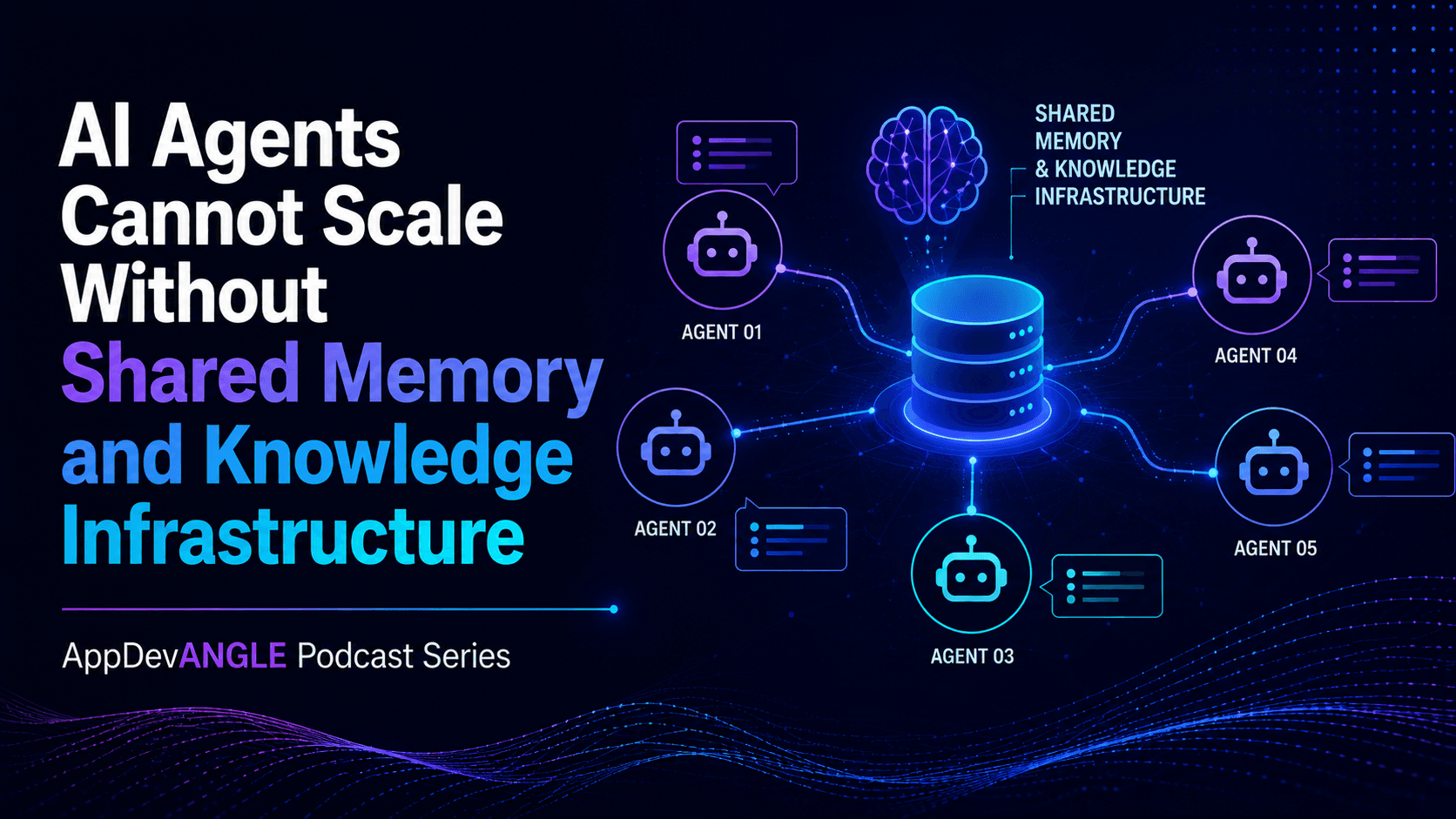
In a rapidly evolving landscape of enterprise artificial intelligence, the need for robust infrastructure to support agentic systems is becoming increasingly apparent. Yugabyte, a company known for its innovative database solutions, has recently launched Meko, a new data infrastructure platform aimed at addressing the persistent memory and knowledge gaps that many enterprise AI agents currently face. This initiative comes at a time when organizations are integrating AI agents into various workflows, including customer support, software development, and sales operations, yet these agents often lack the ability to retain context and share knowledge effectively.
As organizations adopt AI agents, many are finding that these systems are often stateless. This means that while agents can perform tasks such as summarizing documents or automating repetitive processes, they do not retain the context or reasoning behind their actions. This limitation can lead to inefficiencies, as agents are forced to reconstruct context repeatedly instead of building upon a shared knowledge base. Karthik Ranganathan, co-founder and CEO of Yugabyte, emphasizes that the current challenge is not merely about enhancing individual agents but rather about enabling them to share insights and knowledge across systems.
The Need for Persistent Memory
The first generation of enterprise agents has primarily focused on enhancing individual productivity. While this focus has yielded tangible benefits, the real potential lies in enabling multiple agents to collaborate effectively. Currently, agents can exchange outputs, but they do not communicate the reasoning, assumptions, or context that led to those outputs. Ranganathan points out that this lack of shared context among agents is akin to a human team sharing only final conclusions without discussing the thought processes that led to those conclusions.
This gap creates a cycle of repeated work, increased orchestration efforts, and higher operational costs. Without a structured data architecture, agents struggle to maintain a consistent workflow, leading to inefficiencies that can undermine the productivity gains that AI systems are designed to deliver. Meko aims to bridge this gap by providing a framework for agents to store, retrieve, and share knowledge in a way that enhances collaboration and reduces redundancy.
Meko's Innovative Approach
Meko is designed to function as an additional layer above YugabyteDB, which already offers distributed SQL capabilities and supports various data access patterns. This new platform focuses specifically on the needs of agentic workflows, allowing agents to learn from their interactions and from one another. Ranganathan highlights the importance of distinguishing between temporary context, reusable memory, and validated organizational knowledge.
Through the Model Context Protocol (MCP), Meko enables agents to elevate individual memories to collective knowledge that can be shared across teams and applications. This capability not only enhances collaboration but also preserves the lineage of knowledge, allowing organizations to track where information originated and the reasoning behind it. This level of traceability is crucial, especially as agents become more embedded in regulated and critical business processes.
The ability to audit the decision-making process of agents is becoming increasingly important. As organizations rely on AI for mission-critical tasks, understanding why an agent made a particular decision, including the data it used and the context it considered, is essential for ensuring accuracy and accountability. Meko's design facilitates this need by capturing the entire reasoning process, including the queries issued by agents and the context retrieved during their operations.
Why it matters
The implications of Meko's launch extend beyond just improving agent performance; they touch on the very foundation of how enterprises will leverage AI in the future. As organizations transition from isolated AI assistants to collaborative teams of agents, the need for a persistent and governable layer of memory and knowledge becomes critical. Meko represents an attempt to build this infrastructure, ensuring that agents can operate reliably and efficiently over time.
Moreover, the economic validation study released by Yugabyte highlights the financial benefits of adopting distributed PostgreSQL architectures, which can lead to significant cost savings and operational efficiencies. As enterprises face growing data volumes and operational complexities, the need for a robust data layer that supports agentic systems is more pressing than ever. Ranganathan's assertion that an agentic system cannot afford downtime underscores the importance of reliable infrastructure in maximizing the potential of AI applications.
In conclusion, as enterprises continue to integrate AI into their workflows, the focus will increasingly shift from merely optimizing individual models to ensuring that the underlying architecture can support collective intelligence. Meko aims to fill this critical gap in the infrastructure landscape, setting the stage for the next phase of enterprise AI development. Organizations that recognize and invest in this infrastructure will likely find themselves at a competitive advantage as the market evolves.
Frequently asked questions
- What is Meko?
- Meko is a new data infrastructure platform launched by Yugabyte, designed to provide persistent memory, shared knowledge, and traceability for multi-agent systems.
- How does Meko improve AI agent collaboration?
- Meko allows agents to store, retrieve, and share knowledge, enabling them to learn from each other and work together more effectively.
- What are the economic benefits of using distributed PostgreSQL?
- Yugabyte's economic validation study indicates that enterprises can achieve significant cost savings and operational efficiencies by adopting distributed PostgreSQL architectures.
Related stories
AI & art news in your inbox, daily
The day's top stories, summarized. Free, no spam, unsubscribe anytime.