
US: New York City Mayor Mamdani announces ban on AI for younger students
DW (English) · View original source
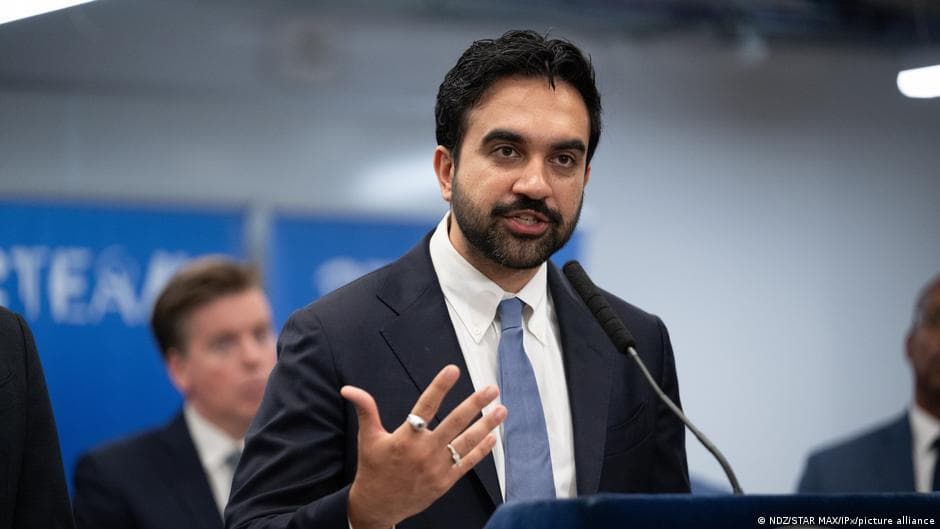
In a significant move aimed at shaping the educational landscape, New York City Mayor Zohran Mamdani announced on Wednesday a temporary ban on the use of generative artificial intelligence (AI) tools for elementary and middle school students. This policy, described as the most extensive prohibition of its kind in the United States, will affect approximately 600,000 public school students during the upcoming school year.
The one-year moratorium specifically targets student-facing generative AI software for students through eighth grade, while also banning companion chatbots across all grade levels. This decision reflects a growing concern among educators and policymakers about the implications of AI technology on young learners. The city plans to conduct a thorough study on how children interact with these technologies during this period of restriction.
Details of the Ban
Under the new policy, around 40 educational AI tools currently utilized in New York City classrooms will be halted. However, high school students will not be subjected to the full ban. Instead, they will have access to AI literacy classes conducted twice a year, and pilot programs will allow select students to use specific AI platforms under the supervision of their teachers. This approach aims to equip older students with a better understanding of AI while maintaining a degree of oversight.
Teachers will still be able to utilize AI for lesson planning and administrative tasks, such as scheduling, indicating that the ban is primarily focused on student interaction with these technologies. Mayor Mamdani emphasized the importance of human connection in education, stating, "Children need teachers and human connection in order to learn and grow. They need to develop skills alongside their peers, build relationships with educators and wrestle with tough problems on their own."
Mamdani further articulated the district's educational philosophy, asserting, "Each day when our children come to school, we teach them to ask questions, to challenge assumptions, to interrogate the premise, to ask why. When it comes to AI in our schools, we hold an obligation to do the same."
This policy aligns with similar actions taken by other school districts across the country, as many grapple with the balance between leveraging technology and ensuring a quality educational experience. For instance, the Los Angeles Unified School District, the second-largest in the U.S., is also implementing a temporary ban on generative AI tools while it develops a formal policy. This district had previously restricted device usage for students below second grade and established screen-time limits as part of a broader technology policy adopted in June.
Broader Technology Use Limits
New York City's initiative is not solely focused on AI; it also includes recommended screen time limits, proposing a cap of 30 minutes daily for students in grades three to five and 45 minutes for those in grades six to eight. Additionally, the city plans to conduct a comprehensive review of educational technology tools to eliminate those deemed nonessential for learning. This multifaceted approach underscores a commitment to ensuring that technology serves educational purposes effectively without compromising student engagement and interpersonal interactions.
As of now, at least 37 states have established some form of official AI guidance for schools, but a consistent national standard for AI literacy instruction remains absent. The lack of a unified framework raises questions about how different districts will navigate the integration of AI into their curricula.
Reactions to New York City's policy have been mixed. Michael Mulgrew, president of the United Federation of Teachers, expressed support for the screen time limits but noted that the AI policy "leaves many questions unanswered." He highlighted concerns regarding how the Education Department will ensure that the tools it purchases include adequate safeguards to protect students.
Josh Golin, executive director of the children's advocacy group Fairplay, called for a longer moratorium and more preparation time before the school year begins. He emphasized the need for AI platforms to prove their effectiveness in teaching, their safety, and their ability to support rather than replace face-to-face interactions, as well as to prevent cheating.
With New York City's approximately 1 million public school students set to return to classrooms next week, the implications of this ban will soon be put to the test. The decision reflects a cautious approach to integrating AI in education, prioritizing human interaction and critical thinking skills over technological reliance.
Why it matters
The implications of New York City's ban on generative AI tools extend beyond the immediate classroom environment. For creators and technologists, this policy highlights the ongoing debate surrounding the role of AI in education and the necessity for responsible implementation. As educational institutions navigate the complexities of technology integration, there is a clear demand for AI tools that not only enhance learning but also prioritize student safety and engagement. The mixed reactions from educators and advocacy groups indicate a need for ongoing dialogue and collaboration to ensure that AI serves as a beneficial resource rather than a hindrance to traditional learning methodologies. As districts like New York and Los Angeles take proactive measures, other regions may follow suit, potentially leading to a patchwork of regulations that could shape the future of educational technology across the nation.
Frequently asked questions
- What is the duration of the AI ban in New York City schools?
- The ban on generative AI tools for elementary and middle school students will last for one year.
- How many students are affected by this ban?
- Approximately 600,000 public school students in New York City will be affected by the ban.
- Are high school students included in the AI ban?
- No, high school students are exempt from the full ban and will have access to AI literacy classes and some AI tools under teacher supervision.
Related stories
AI & art news in your inbox, daily
The day's top stories, summarized. Free, no spam, unsubscribe anytime.