
This new brain-like chip could slash AI energy use by 70%
Science Daily · View original source
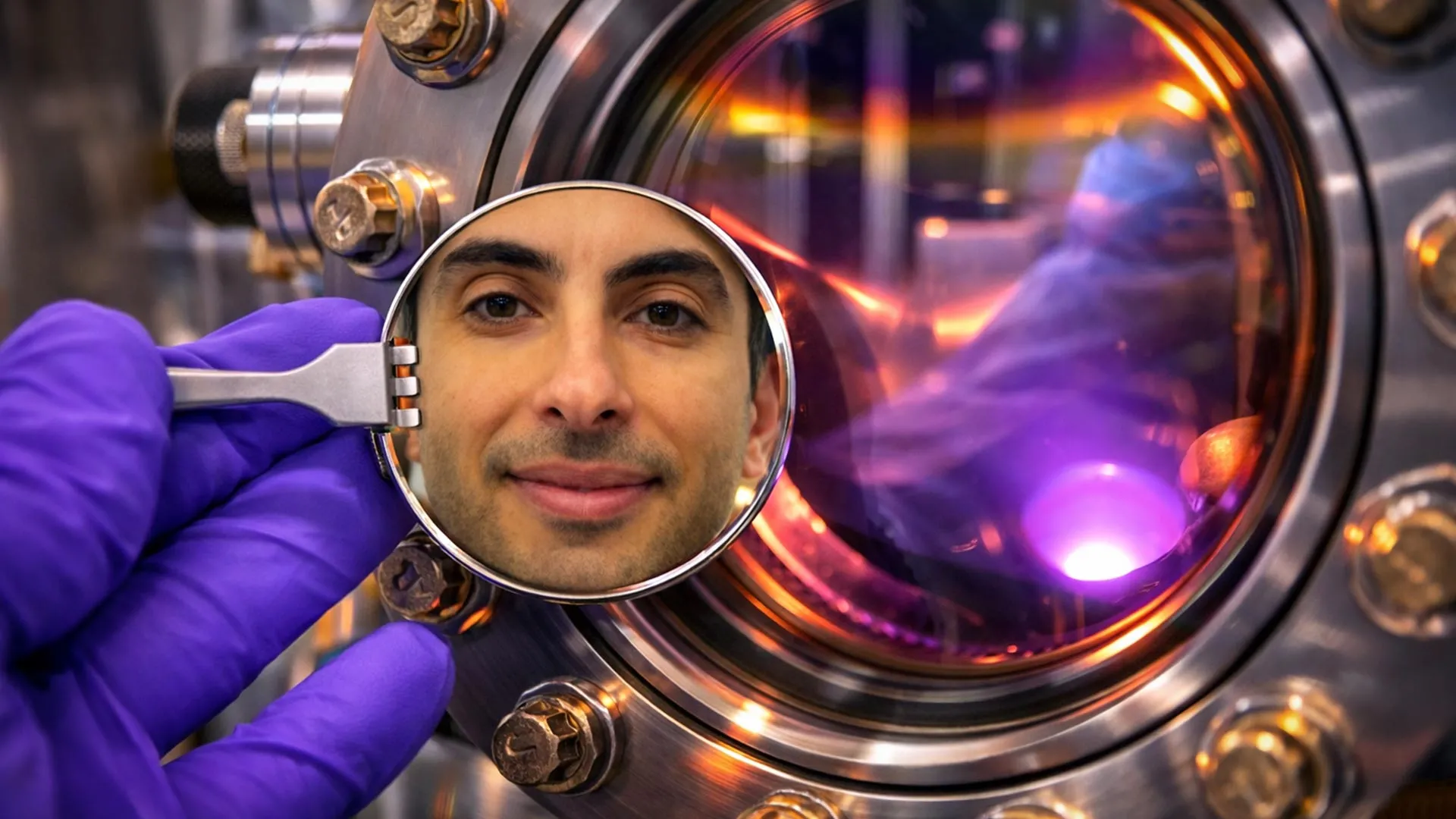
In a groundbreaking development, scientists have engineered a new nanoelectronic device that has the potential to drastically reduce the energy consumption of artificial intelligence (AI) systems by as much as 70%. This innovative technology mimics the way the human brain processes information, presenting a more energy-efficient alternative to the traditional, power-hungry hardware currently used in AI applications. The research, led by a team from the University of Cambridge, has been published in the journal Science Advances, marking a significant step forward in the quest for sustainable AI technology.
The Science Behind the Innovation
At the core of this advancement is a modified form of hafnium oxide, which serves as a low-energy 'memristor.' This component is designed to emulate the connections and communications between neurons in the brain. Traditional AI systems rely on conventional computer chips that necessitate constant data transfers between memory and processing units, a process that consumes substantial electricity. As the demand for AI applications continues to grow across various industries, the need for more efficient computing solutions has become increasingly urgent.
The concept of neuromorphic computing offers a promising alternative. Unlike traditional systems that separate memory and processing tasks, neuromorphic computing integrates both functions into a single unit, akin to the operational structure of the human brain. This integration not only has the potential to significantly reduce energy consumption but also enhances the ability of AI systems to learn and adapt more naturally.
Lead author Dr. Babak Bakhit from Cambridge's Department of Materials Science and Metallurgy emphasizes the importance of energy efficiency in AI hardware. He notes that addressing energy consumption requires devices that operate with extremely low currents, exhibit excellent stability, and demonstrate uniformity across various switching cycles. Most existing memristors rely on the formation of tiny conductive filaments within metal oxide materials, which can behave unpredictably and often necessitate high voltages, thus limiting their practical applications in large-scale computing.
The Cambridge research team took a novel approach by engineering a hafnium-based thin film that switches states through a controlled mechanism. By incorporating strontium and titanium and employing a two-step growth process, they successfully created small electronic gates, known as 'p-n junctions,' at the interfaces between layers of the material. This design allows the device to adjust its resistance by modifying the energy barrier at these interfaces, leading to smoother and more reliable switching behavior.
Performance and Stability
The experimental results indicate that the new memristors operate at switching currents approximately a million times lower than some conventional oxide-based memristors. Furthermore, they can achieve hundreds of stable conductance levels, which is crucial for analog 'in-memory' computing applications. In laboratory tests, these devices demonstrated stability through tens of thousands of switching cycles and maintained their programmed states for about a day. They also exhibited key biological learning behaviors, such as spike-timing dependent plasticity, which is essential for enabling hardware to learn and adapt rather than simply storing binary data.
Despite these promising outcomes, the researchers acknowledge that challenges remain. The current manufacturing process requires temperatures around 700°C, which exceeds the limits of standard semiconductor fabrication techniques. Dr. Bakhit identifies this high-temperature requirement as the primary hurdle in the device fabrication process. However, the team is actively exploring methods to lower the temperature, making the technology more compatible with existing industry practices.
If the temperature issue can be resolved, the new technology could be integrated into practical chip-scale systems. Dr. Bakhit asserts that achieving this integration would represent a significant advancement, as it would enable the development of AI hardware that is both energy-efficient and high-performing.
The progress reported in this study follows several years of experimentation, during which the research team encountered numerous setbacks. Dr. Bakhit noted that advancements accelerated late last year when he modified the fabrication process by introducing oxygen only after forming the initial layer. Reflecting on the journey, he remarked, "I spent almost three years on this. There were a huge number of failures. But at the end of November, we saw the first really good results. It's still early days, of course, but if we can solve the temperature issue, this technology could be game-changing because the energy consumption is so much lower and at the same time, the device performance is highly promising."
The research received support from several organizations, including the Swedish Research Council, the Royal Academy of Engineering, the Royal Society, and UK Research and Innovation. A patent application has been filed by Cambridge Enterprise, the university's innovation arm, to protect this promising technology.
Why it matters
The development of this new memristor technology has significant implications for both creators and technologists in the AI field. As energy consumption remains a critical challenge for AI systems, innovations that reduce power usage while enhancing performance are essential for the sustainable growth of AI applications. This new approach not only promises to lower energy costs but also aligns with global efforts to create more environmentally friendly technologies.
For creators, the ability to harness more efficient AI hardware could lead to new possibilities in design and functionality, allowing for more complex and adaptive systems without the prohibitive energy costs associated with current technologies. For technologists, the integration of such devices into mainstream computing could catalyze advancements in AI capabilities, enabling more sophisticated applications across various sectors, from healthcare to autonomous systems. The potential for this technology to revolutionize AI hardware underscores the importance of continued research and development in the field of neuromorphic computing.
Frequently asked questions
- What is a memristor?
- A memristor is a type of electronic component that can adjust its resistance based on the history of voltage applied to it, mimicking the behavior of synapses in the brain.
- How does this new device improve energy efficiency?
- The new device integrates memory and processing functions, reducing the need for constant data transfer and thereby lowering energy consumption significantly.
- What are the current challenges in manufacturing this technology?
- The primary challenge is the high manufacturing temperature of around 700°C, which exceeds standard semiconductor fabrication processes.
Related stories
AI & art news in your inbox, daily
The day's top stories, summarized. Free, no spam, unsubscribe anytime.