
Temperature Zero for Culture: Why Everything Is Starting to Look the Same
Substack.com · View original source
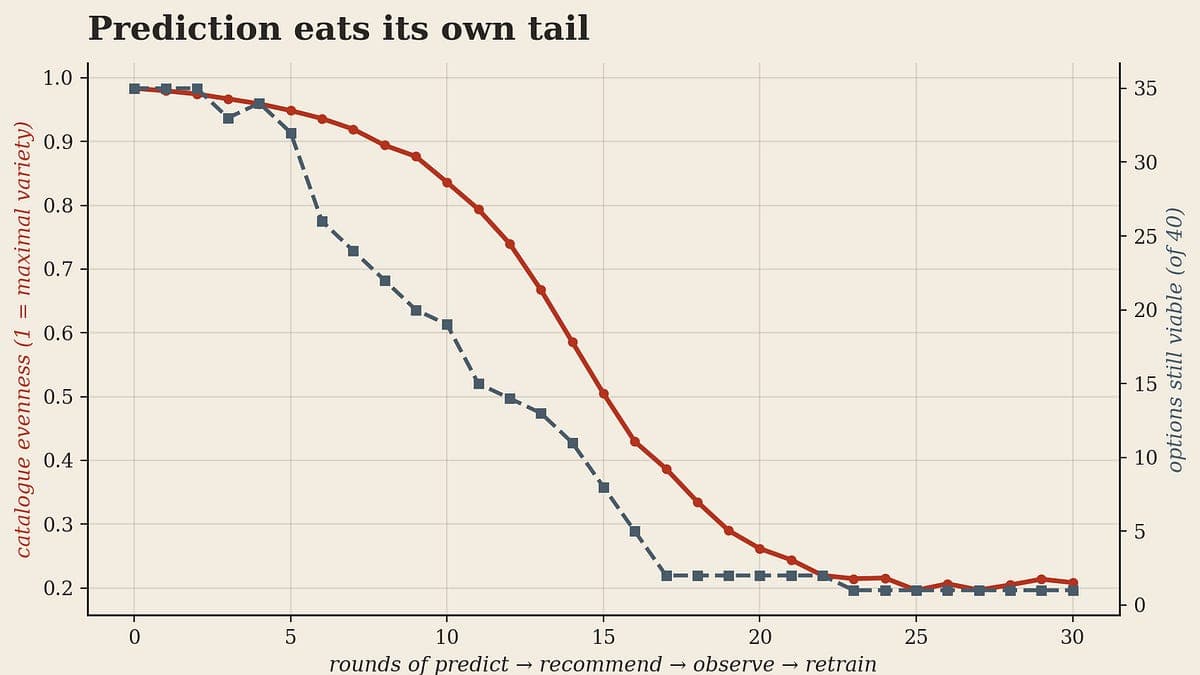
In an era marked by unprecedented access to individual data, a paradox has emerged: despite the wealth of information available, our cultural landscapes are becoming increasingly homogenized. This phenomenon has been articulated by an anonymous writer who reflects on their experiences relocating to The Hague, where the familiar aesthetics of modern living spaces and café offerings starkly resemble those found in other cities. The writer's observations raise critical questions about how recommender algorithms, designed to curate personalized experiences, inadvertently lead to a convergence of cultural expressions, resulting in a world that looks and feels the same.
The Mechanics of Homogenization
The writer begins by outlining the mechanics behind this cultural flattening, emphasizing that recommender systems operate on a feedback loop. These systems predict user preferences based on historical data, displaying options that align with perceived desires. However, as the algorithms learn from user interactions, they tend to favor the most popular choices, leading to a situation where dominant options overshadow niche alternatives. This cycle of reinforcement creates a scenario where diversity diminishes, as the algorithms hedge toward the average or most common preferences, effectively sidelining unique or unconventional offerings.
The writer elaborates on this process by referencing the concept of 'model collapse,' where a system trained on its outputs leads to a reduction in variance over time. This phenomenon is not limited to cultural products but extends to urban environments, where chains and franchises proliferate, creating a sense of placelessness. The writer's analysis of London's high streets illustrates this point: areas dominated by chain establishments exhibit a striking similarity in their culinary offerings, despite the city's reputation for diversity. The presence of a few recognizable names can homogenize the character of an entire neighborhood, as businesses seek to replicate successful models based on data-driven predictions.
Cultural Implications of Algorithmic Predictability
Delving deeper into the implications of this homogenization, the writer draws parallels between cultural production and the broader political economy. The algorithms that dictate our consumption patterns do not necessarily need to be accurate in predicting what individuals will love; they simply need to be effective in predicting what users will click on. This creates a self-reinforcing cycle where the most popular content continues to dominate, while less mainstream options fade into obscurity. The result is a cultural landscape that, while appearing diverse on the surface, is increasingly constrained by algorithmic biases that prioritize engagement over variety.
The writer’s exploration of music trends further illustrates this point. An analysis of Billboard Hot 100 hits reveals a decline in vocabulary richness within individual songs, suggesting that contemporary music increasingly relies on repetitive hooks to capture listener attention. However, when examining the diversity of hits across the chart as a whole, a different narrative emerges: the overall variety of music has increased since 2017. This discrepancy underscores the notion that while individual songs may converge toward a formulaic approach, the broader musical landscape remains vibrant and diverse, driven by factors beyond mere predictability.
The Future of Cultural Diversity
The writer concludes by reflecting on the broader implications of their findings, particularly for creators and technologists. The challenge lies in recognizing that while algorithms can enhance convenience and streamline choices, they also risk stifling innovation and diversity. The tendency to prioritize popular content over unique expressions can lead to a cultural environment where new ideas struggle to gain traction.
As creators and technologists navigate this landscape, they must grapple with the consequences of algorithmic decision-making. The pursuit of personalization should not come at the expense of diversity; rather, there must be a concerted effort to ensure that the algorithms we design promote a rich tapestry of cultural expressions. This may involve rethinking how we approach data and recommender systems, prioritizing variance and uniqueness alongside user engagement.
In summary, the writer's reflections serve as a poignant reminder of the delicate balance between personalization and diversity in our increasingly algorithm-driven world. As we continue to shape our cultural landscapes, it is imperative to remain vigilant against the forces that seek to homogenize our experiences, ensuring that the richness of human creativity is preserved and celebrated.
Frequently asked questions
- What is model collapse?
- Model collapse refers to the phenomenon where a system trained on its own outputs leads to a reduction in variance over time, resulting in a convergence toward the most common or popular options.
- How do recommender algorithms affect cultural diversity?
- Recommender algorithms prioritize popular content based on user engagement, which can lead to a cultural landscape that appears diverse but is actually dominated by a few mainstream choices.
- Why is variety important in cultural production?
- Variety is crucial in cultural production because it fosters innovation and creativity, allowing for unique expressions and ideas to emerge rather than being overshadowed by dominant trends.
Related stories
AI & art news in your inbox, daily
The day's top stories, summarized. Free, no spam, unsubscribe anytime.