
Stanford quantum computing breakthrough uses twisted light to work without extreme cooling
Science Daily · View original source
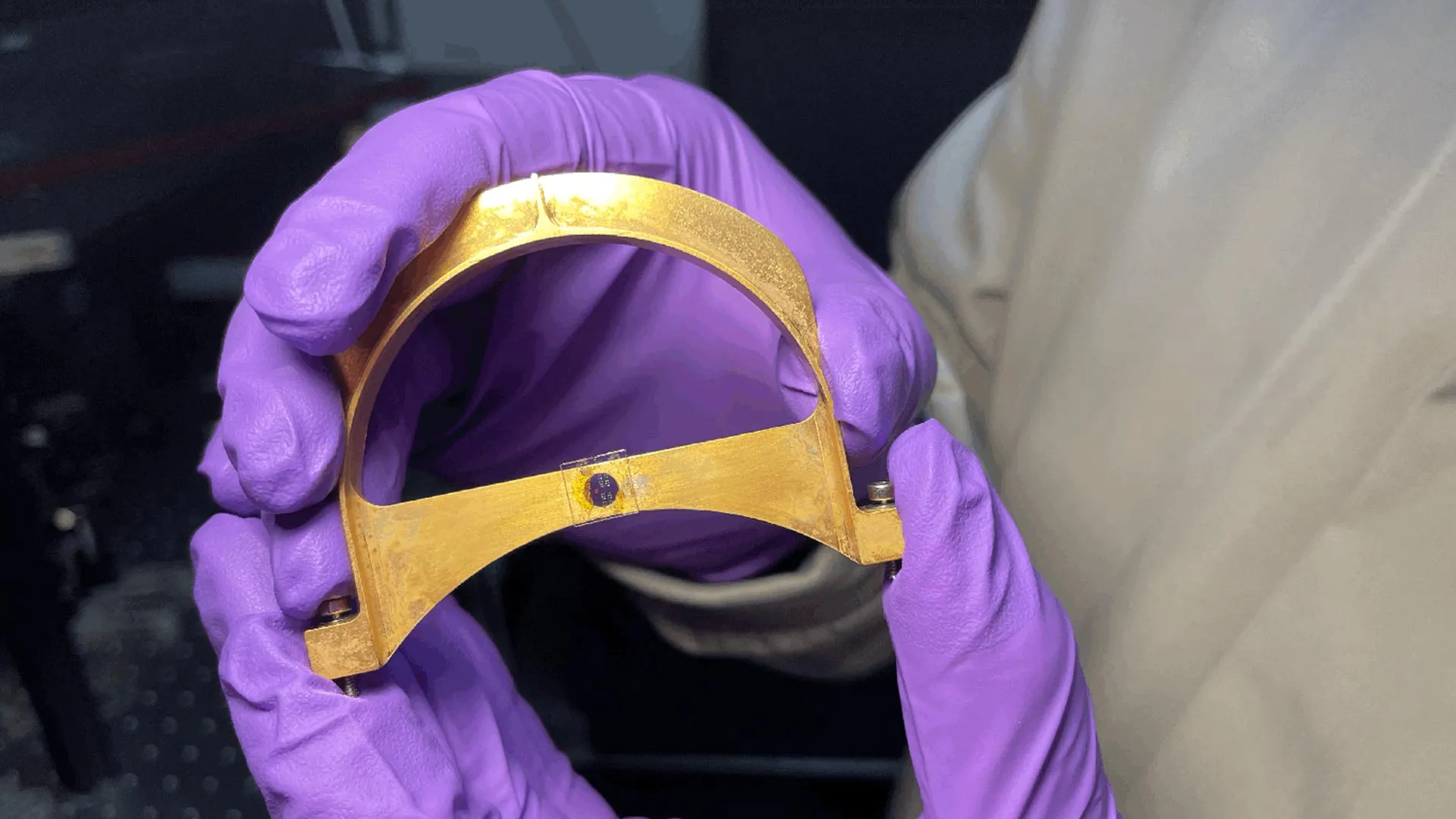
In a significant advancement for quantum computing, researchers at Stanford University have unveiled a nanoscale optical device that operates at room temperature, eliminating the need for the extreme cooling typically required by current quantum systems. This breakthrough, which links the quantum properties of light and electrons, could pave the way for smaller, more affordable quantum technologies capable of transmitting information over long distances.
Quantum computers are known for their complexity and high operational costs, largely due to their requirement for temperatures near absolute zero, approximately -459 degrees Fahrenheit. Such extreme conditions are necessary to maintain the fragile quantum states essential for computation and communication. However, the new device developed by Stanford researchers changes this paradigm by functioning effectively at room temperature, a feat that could enhance the accessibility and practicality of quantum technologies.
The Mechanism Behind the Breakthrough
The innovative device enables entanglement between photons, the fundamental particles of light, and electrons, which is a crucial requirement for future quantum communication systems. Jennifer Dionne, a professor of materials science and engineering at Stanford and the senior author of the study published in Nature Communications, emphasizes that while the material used is not entirely new, the method of its application is groundbreaking. Dionne states, "It provides a very versatile, stable spin connection between electrons and photons that is the theoretical basis of quantum communication. Typically, however, the electrons lose their spin too quickly to be useful."
The device integrates a thin patterned layer of molybdenum diselenide (MoSe2) with a nanopatterned silicon substrate. Molybdenum diselenide is part of a class of materials known as transition metal dichalcogenides (TMDCs), which are recognized for their unique optical and quantum properties. The silicon nanostructures are pivotal in generating what researchers refer to as "twisted light."
Feng Pan, a postdoctoral scholar in Dionne's lab and the paper's first author, explains that the silicon nanostructures enable photons to spin in a corkscrew fashion. This phenomenon allows the spinning photons to impart spin on electrons, which are integral to quantum computing. The patterned structures, although imperceptible to the human eye, are comparable in size to the wavelength of visible light. They allow researchers to manipulate photons with precision, twisting them in specific directions, which is essential for creating entangled states with electron spins.
In quantum computing, qubits serve as the basic units of information, similar to how bits function in classical computing. However, qubits can leverage quantum mechanical effects, enabling novel methods of processing and transmitting information. One of the primary challenges in quantum technologies is maintaining stable quantum states, as decoherence can lead to the loss of delicate quantum information. The new device's ability to operate at room temperature addresses this significant obstacle, making it a promising candidate for practical applications in quantum technologies.
Implications for the Future of Quantum Technology
The implications of this research extend beyond just the development of a new device. The compact and relatively inexpensive design of the Stanford device could lead to advancements in secure communications, advanced sensing, high-performance computing, artificial intelligence, and other emerging applications. The researchers are optimistic that further development of this technology could contribute to the establishment of larger quantum networks.
The collaboration with Stanford researchers Fang Liu and Tony Heinz, who specialize in TMDC materials, has been instrumental in achieving this breakthrough. Pan notes, "It all comes down to this material and our Silicon chip. Together, they efficiently confine and enhance the twisting of light to create a strong coupling of spin between photons and electrons. This stabilizes the quantum state that makes quantum communication possible."
As the team continues to refine the device, they are exploring additional TMDC materials and combinations that could enhance performance further. They are also investigating the potential for these systems to unlock new quantum capabilities that may not currently be feasible at room temperature.
Looking ahead, the researchers aim to integrate devices like this into larger quantum networks. Achieving this vision will necessitate advancements in supporting technologies, such as light sources, modulators, detectors, and interconnects. Ultimately, the goal is to miniaturize quantum components sufficiently to incorporate them into everyday electronics. While this vision may be years away, Pan expresses optimism, stating, "If we can do that, maybe someday we could do quantum computing in a cell phone. But that's a 10-plus-year plan."
This research represents a pivotal step toward making quantum technology more accessible and practical, potentially transforming the landscape of computing and communication in the years to come.
Frequently asked questions
- What is the significance of operating quantum devices at room temperature?
- Operating quantum devices at room temperature eliminates the need for extreme cooling, making them more accessible and practical for widespread use.
- What are qubits and how do they differ from classical bits?
- Qubits are the basic units of quantum information, similar to bits in classical computing, but they can leverage quantum mechanical effects to process and transmit information in new ways.
- What materials are used in the Stanford quantum device?
- The device combines a thin patterned layer of molybdenum diselenide (MoSe2) with a nanopatterned silicon substrate, utilizing transition metal dichalcogenides (TMDCs) for their unique optical and quantum properties.
Related stories
AI & art news in your inbox, daily
The day's top stories, summarized. Free, no spam, unsubscribe anytime.