
Space Force Integrates with Air Force in AI Sprint to Ensure Mission Dominance
Soldiersystems.net · View original source
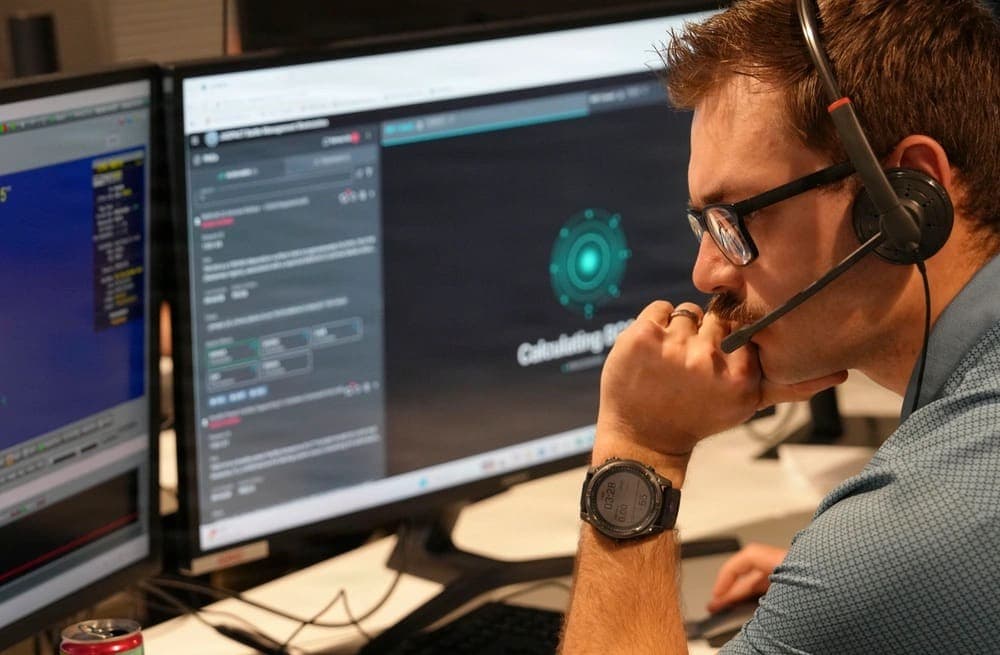
In a bid to enhance decision-making capabilities in contested environments, the U.S. Space Force and Air Force have embarked on a pioneering experiment known as the Multi-Decision Advantage Sprint for Human-Machine Teaming (MASH). This two-week initiative, conducted in Las Vegas, aims to integrate artificial intelligence (AI) and automation tools to ensure mission dominance against adversaries. The MASH experiment builds upon previous efforts, marking a significant evolution in the collaboration between military personnel and software developers, as they work together to address complex challenges across various operational domains, including air, space, cyber, maritime, and ground.
The urgency of this initiative is underscored by the need for the Joint Force to make quicker decisions than any potential adversary. According to U.S. Air Force Col. John Ohlund, director of the Advanced Battle Management System Cross-Functional Team, the integration of AI into battle management systems is crucial for processing vast amounts of data efficiently and delivering timely, lethal responses. This experiment was conducted at the Shadow Operations Center-Nellis facility in Las Vegas, with the Department of the Air Force leading the charge in partnership with the Air Force Research Lab, U.S. Space Force, and the 805th Combat Training Squadron.
A distinctive aspect of the MASH experiment was the active involvement of Space Force Guardians, who were not merely observers but played a crucial role in shaping the development of battle management tools. U.S. Space Force 1st Lt. Abby Warner highlighted the parallels between air and space operations, noting that the challenges faced in decision-making are similar across domains. This integration is vital as it allows for the rapid adaptation of AI tools to meet the unique demands of space operations.
The collaborative nature of the MASH experiment also included the participation of four allied nations, who observed the U.S. approach to integrated architectures. This not only provided insights into the U.S. military's strategies but also laid the groundwork for future interoperability among allied forces.
The Integration of AI in Battle Management
The MASH experiment's focus on integrating AI into battle management systems represents a significant shift in military operations. Lt. Col. Corey Ellsworth, integration lead for the ABMS Cross-Functional Team, emphasized the importance of aligning the DAF's modernization efforts with the needs of each military service. The software solutions tested during MASH are designed to be applicable across the Navy, Marine Corps, and Army, reinforcing the concept of a unified combat multi-domain power for the Total Joint Force.
Col. Teina Stallings-Lilly, deputy director for space operations integration, stressed the long-term implications of this integration. She noted that the DAF is evolving beyond traditional decision support systems to develop capabilities that process information at machine speeds. The MASH experiment is fundamentally about creating a human-machine team that can think and act faster than adversaries, ensuring that operators remain ahead in the rapidly changing landscape of modern warfare.
The experiment also showcased the collaborative efforts of military personnel and software developers, who worked side by side to stress-test AI decision logic and provide immediate feedback. This co-creation environment allowed for rapid iterations and improvements to the tools being developed, ultimately enhancing the operational effectiveness of military operators. Capt. Adam Sochia from the 552nd Operations Support Squadron noted a significant increase in task efficiency, with the new tools enabling his team to accomplish multiple assignments in the time it previously took to complete one.
Implications for Future Military Operations
The MASH experiment serves as a blueprint for the future of multi-domain operations, illustrating the potential of AI and automation in enhancing military decision-making. The successful integration of various software tools during the sprint demonstrates the effectiveness of a plug-and-play approach, which fosters competition among vendors and allows the military to select the best solutions as they evolve.
The operational impact of this integration extends beyond the immediate benefits observed during the MASH experiment. By validating the DAF's Transformational Model, the initiative proves that breaking down battle management into specific decision functions, supported by a common integration framework, enables machines to process data at unparalleled speeds. This capability is essential for maintaining a strategic advantage in future conflicts, where the ability to make informed decisions quickly can be the difference between success and failure.
In conclusion, the MASH experiment marks a critical step in the evolution of military operations, emphasizing the importance of cross-service collaboration and the integration of AI technologies. As the U.S. military continues to refine its approach to multi-domain operations, the lessons learned from this initiative will undoubtedly shape the future of combat readiness and decision-making in an increasingly complex threat environment.
Frequently asked questions
- What is the MASH experiment?
- The MASH experiment, or Multi-Decision Advantage Sprint for Human-Machine Teaming, is a two-week initiative aimed at integrating AI and automation tools to enhance military decision-making in contested environments.
- Who participated in the MASH experiment?
- The MASH experiment involved U.S. Space Force Guardians, Air Force personnel, software developers, and observers from four allied nations.
- What are the implications of the MASH experiment for future military operations?
- The MASH experiment serves as a blueprint for future multi-domain operations, demonstrating how AI integration can enhance decision-making speed and effectiveness in military contexts.
Related stories
AI & art news in your inbox, daily
The day's top stories, summarized. Free, no spam, unsubscribe anytime.