
Space data center startup Starcloud raises $170M at $1.1B valuation
SiliconANGLE News · View original source
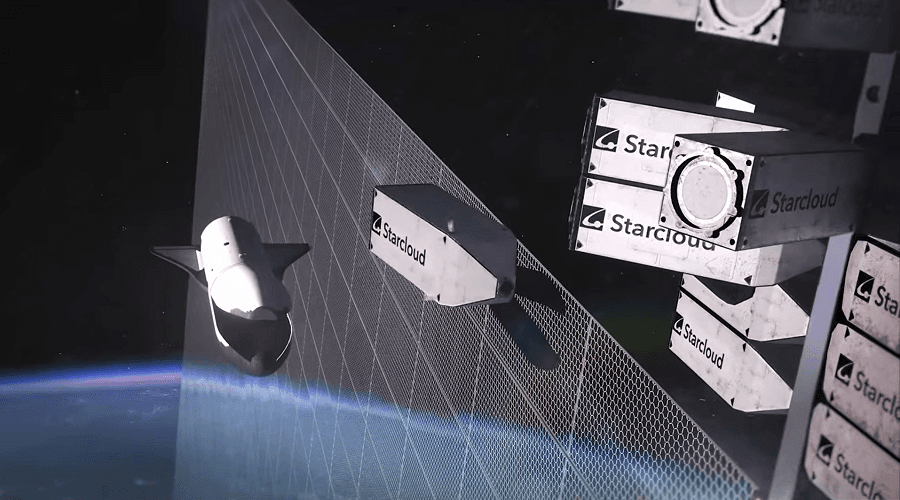
Starcloud Inc., an innovative startup, has successfully secured $170 million in funding to advance its ambitious project of establishing a 5-gigawatt artificial intelligence data center in orbit. This funding round, which has elevated the company's valuation to $1.1 billion, was conducted in two phases, with Benchmark leading the first and co-leading the second alongside EQT. Additional support came from a diverse group of investors, including Monolith Power Systems Inc., a publicly traded company specializing in power management chips.
This funding achievement comes approximately five months after Starcloud launched its inaugural satellite, Starcloud-1, which is currently positioned in low-Earth orbit. The satellite is equipped with an H100 graphics processing unit (GPU), which has been utilized to train a custom AI model and execute algorithms from Google LLC’s Gemini neural network series. This development marks a significant step in the company's mission to leverage space-based infrastructure for AI applications.
The Advantages of Space-Based AI Infrastructure
Starcloud posits that establishing data centers in space presents distinct advantages compared to traditional terrestrial setups. One of the primary challenges faced by data centers on Earth is the need for effective cooling systems that rely on mediums like air or water to dissipate heat generated by servers. In the vacuum of space, however, there is no such medium, necessitating a different approach to heat management. The only feasible method to cool a GPU in space is through radiative cooling, which involves dissipating heat as infrared light.
While radiative cooling introduces unique challenges not encountered on Earth, it also offers significant benefits. The passive nature of the radiators used in this process means they have simpler designs and consume less power than conventional cooling systems. This efficiency could potentially lead to lower operational costs for data centers operating in orbit.
Starcloud plans to harness solar energy to power its space-based data centers. Unlike terrestrial solar panels, which experience fluctuations in power generation due to varying weather conditions and the time of day, solar panels in orbit can generate electricity consistently. This consistency allows orbital solar panels to produce five times more power than their Earth-bound counterparts, enhancing the viability of space-based data centers.
Future Developments and Long-Term Vision
Currently, Starcloud is in the process of developing a successor to its first satellite, aptly named Starcloud-2. This new satellite is set to feature what the company claims will be the largest “commercial deployable radiator” ever launched into space. The onboard solar array of Starcloud-2 is designed to generate 100 times more power than that of Starcloud-1. Scheduled for launch later this year, Starcloud-2 aims to facilitate AI workloads for multiple clients, including Crusoe Inc., a company specializing in AI data center construction.
Starcloud's long-term vision extends far beyond the capabilities of its current satellites. The company envisions the assembly of a 5-gigawatt orbital data center composed of modular units referred to as containers. Each container would house multiple liquid-cooled AI servers, along with necessary networking and storage equipment. A port featuring thousands of fiber-optic cables would enable efficient data exchange between these modules, creating a robust and interconnected data center environment.
Philip Johnston, co-founder and CEO of Starcloud, articulated the transformative potential of this initiative, stating, “By moving AI compute to space, we unlock access to unlimited solar power and completely remove the energy bottleneck.” This statement underscores the company's belief that the advantages of space-based infrastructure could significantly enhance the scalability and efficiency of AI computing.
To support its ambitious plans, Starcloud intends to establish a manufacturing facility and expand its workforce using the newly acquired capital. Additionally, the company aims to secure capacity on space launch vehicles to facilitate the deployment of its technology.
As the landscape of AI and data infrastructure continues to evolve, Starcloud's pioneering approach to space-based computing may represent a significant shift in how data centers operate, potentially setting new standards for efficiency and scalability in the industry.
Frequently asked questions
- What is Starcloud's main project?
- Starcloud is developing a 5-gigawatt artificial intelligence data center in orbit.
- How does radiative cooling work in space?
- In space, heat is dissipated from GPUs as infrared light, as there is no air or water to conduct heat away.
- What are the benefits of solar panels in orbit?
- Solar panels in orbit can generate five times more power than those on Earth due to the absence of weather and day-night cycles.
Related stories
AI & art news in your inbox, daily
The day's top stories, summarized. Free, no spam, unsubscribe anytime.