
Samsung Unveils HBM4E: A Leap in AI Memory Performance
Ibtimes.com.au · View original source
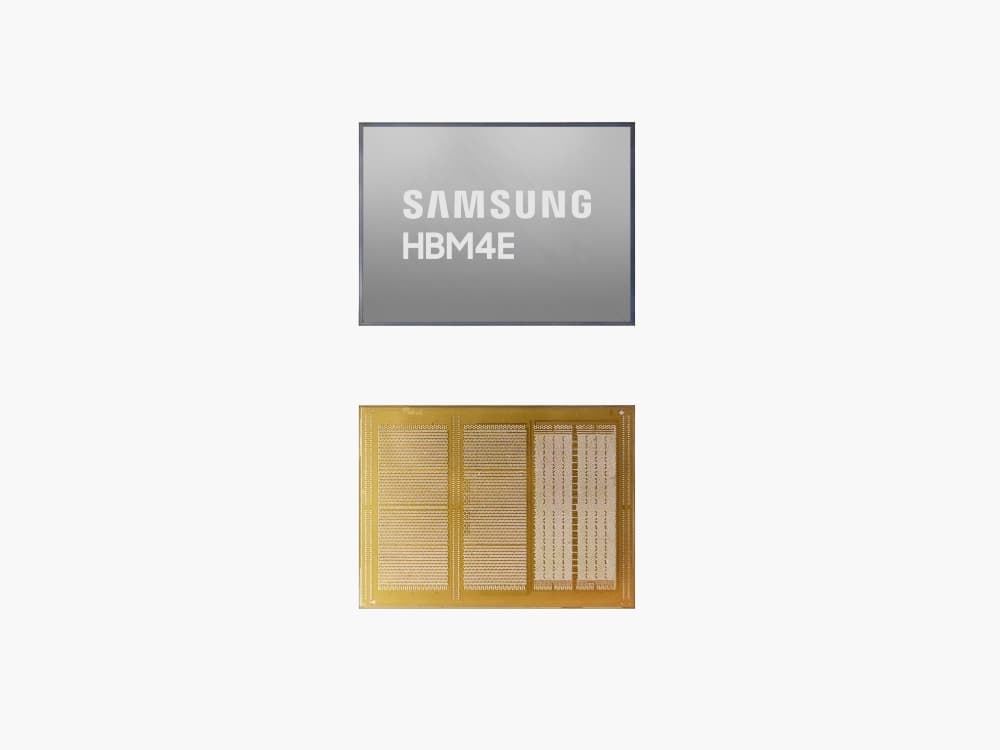
Samsung Electronics has recently taken a significant leap in the realm of high-bandwidth memory technology with the introduction of its 12-layer HBM4E chips. This announcement, made on May 29, 2026, marks the company's first shipment of samples to major global customers, positioning Samsung at the forefront of the race to provide advanced memory solutions tailored for next-generation artificial intelligence systems. The development follows the earlier commercial rollout of its HBM4 memory earlier in the same year, showcasing Samsung's commitment to meeting the escalating demands of AI data centers and hyperscale computing infrastructures.
The HBM4E chips are engineered to achieve impressive pin speeds of up to 16 gigabits per second, which is more than a 20% enhancement over the previous HBM4 generation. With a bandwidth capacity of up to 3.6 terabytes per second per stack and a configuration of 48 gigabytes, the HBM4E chips also offer over 30% increased capacity compared to their predecessors. Samsung plans to diversify its offerings by introducing 32GB 8-layer and 64GB 16-layer options, catering to specific customer requirements.
The advancements seen in the HBM4E chips are a direct result of Samsung's extensive experience in HBM4 production. The company has utilized its cutting-edge 6th-generation 10-nanometer-class DRAM process along with 4nm logic base die technology from its foundry operations to enhance both stability and manufacturability. These technological improvements have led to a 16% increase in energy efficiency and over 14% better thermal resistance compared to the prior generation, addressing critical concerns for data centers focused on performance and sustainability.
Sang Joon Hwang, Executive Vice President and Head of Memory Development at Samsung Electronics, emphasized the importance of this milestone, stating that the successful mass production of HBM4 has allowed Samsung to showcase its technological superiority with the HBM4E. He noted that the company's advanced manufacturing capabilities and proactive infrastructure investments will continue to drive growth in the global AI memory market.
The Technical Edge of HBM4E
The HBM4E chips represent a significant evolution in high-bandwidth memory technology, which is increasingly vital for training and executing large language models and other demanding AI workloads. Unlike traditional DRAM, which operates in a more linear fashion, HBM stacks multiple memory dies vertically and connects them through silicon vias. This innovative design facilitates dramatically higher data transfer rates while consuming less power and physical space, making it particularly advantageous for data centers that are under pressure to optimize energy usage.
As the demand for AI accelerators rises globally, major cloud providers and AI chip designers are in urgent need of sophisticated memory solutions to manage the exponential growth in model sizes and computational requirements. The HBM4E's improved thermal performance is especially critical for data centers grappling with increasing energy costs and sustainability challenges, ensuring that they can operate efficiently in a competitive landscape.
Industry analysts have noted that Samsung's swift transition from HBM4 to HBM4E exemplifies the company's manufacturing prowess. The positive feedback received from customers regarding the performance and energy efficiency of the HBM4 generation has spurred the accelerated development of the HBM4E. The initial 12-layer design pushes the limits of current stacking technology, optimizing both memory and logic architectures to enhance overall yield and reliability while maintaining high performance levels.
Samsung's strategy includes plans to commence mass production of the HBM4E in alignment with customer schedules, following the completion of sample validation and optimization phases. The company's extensive semiconductor portfolio, which includes memory, foundry services, logic design, and advanced packaging, provides it with a strategic advantage in ensuring a stable supply for AI customers.
Implications for Creators and Technologists
The introduction of HBM4E has significant implications for the AI industry, as the availability of advanced memory solutions directly influences the pace of innovation. Higher bandwidth and capacity enable the development of larger models, facilitate faster training times, and improve the efficiency of inference operations. Samsung's emphasis on energy efficiency resonates with the growing demands from data center operators who are increasingly focused on managing power consumption amid the rapid expansion of AI technologies.
The competitive landscape within the memory market, particularly in the HBM segment, has intensified. While Samsung currently holds a strong position, competitors like SK Hynix and Micron Technology are also heavily investing in next-generation high-bandwidth solutions. The enhancements in speed, capacity, and efficiency offered by the HBM4E could help Samsung maintain or even expand its market share in this critical category.
As Samsung moves towards mass production, the focus will shift to how quickly customers can integrate this new memory into their systems. The early shipments of samples will allow partners to begin testing and validation processes, potentially accelerating the timelines for commercial deployment. The HBM4E's introduction comes at a crucial juncture for the semiconductor industry, as the growing demands of AI workloads necessitate rapid advancements in memory technology to prevent bottlenecks in computing performance.
Looking ahead, Samsung is expected to continue expanding its HBM portfolio with further innovations in stacking, speed, and efficiency. These advancements will play a pivotal role in enabling more capable and sustainable AI infrastructure worldwide, ensuring that the technology keeps pace with the evolving needs of the industry.
Frequently asked questions
- What is HBM4E?
- HBM4E is a high-bandwidth memory technology developed by Samsung, designed to provide faster data transfer rates and higher capacity for demanding AI applications.
- How does HBM4E improve performance for AI workloads?
- HBM4E improves performance by offering higher bandwidth and capacity, which allows for larger AI models, faster training times, and more efficient inference operations.
- What advantages does Samsung's HBM4E have over previous generations?
- Samsung's HBM4E offers over 20% improvement in speed, more than 30% higher capacity, and enhanced energy efficiency compared to the previous HBM4 generation.
Related stories
AI & art news in your inbox, daily
The day's top stories, summarized. Free, no spam, unsubscribe anytime.