
Report: Edge AI chip startup Hailo to go public via SPAC merger
SiliconANGLE News · View original source
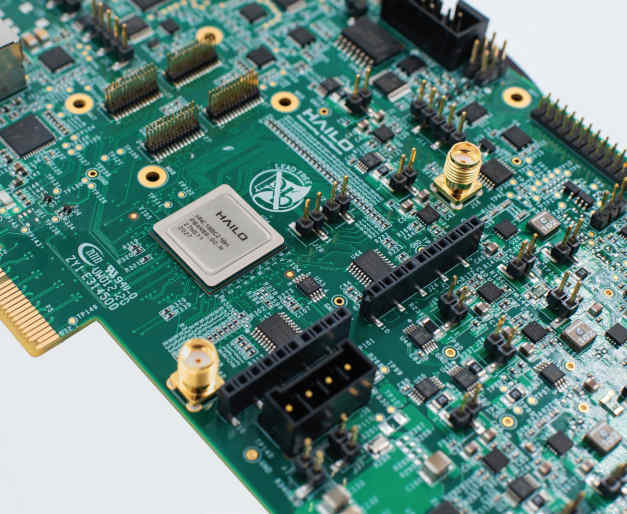
Chipmaker Hailo Technologies Ltd. is reportedly on the verge of going public through a merger with a special-purpose acquisition company (SPAC). This development, revealed by Calcalist, comes amid financial challenges for the company, which has faced an urgent need for liquidity. Hailo, which specializes in producing artificial intelligence chips for connected devices, previously laid off nearly 10% of its workforce in January and secured a $9 million loan around the same time to stabilize its finances.
In 2024, Hailo was valued at $1.2 billion, but according to Delek Automotive's regulatory filings, the upcoming stock listing could reduce this valuation to under $500 million. This significant drop highlights the financial pressures the company is currently experiencing as it seeks to strengthen its balance sheet through public market access.
Understanding SPACs and Their Role
A special-purpose acquisition company is an investment vehicle specifically created to take another business public. By merging with a SPAC, Hailo can expedite its entry into the public markets compared to a traditional initial public offering (IPO). This route eliminates the need for a roadshow, a series of presentations designed to attract institutional investors, which can be a lengthy and resource-intensive process for startups.
Hailo’s product line includes advanced AI chips used in various applications such as cameras and industrial robots. The company’s chips are built on a unique structure-driven dataflow architecture, which is designed to enhance the efficiency of processing AI workloads. This architecture allows for a more effective organization of artificial neurons, which are grouped into layers within a neural network. Each layer performs specific calculations and communicates results to the next layer, facilitating complex processing tasks.
Hailo’s innovative design places these layers on adjacent sections of the chip, minimizing the distance data must travel between them. This reduction in data movement is crucial as it lowers both processing latency and power consumption, making Hailo’s chips more efficient than many competing solutions.
One of Hailo’s flagship products, the Hailo-10H chip, boasts impressive capabilities, performing 40 trillion calculations per second when processing INT4 data. Remarkably, it operates on just 2.5 watts of power and can withstand high temperatures of up to 221 degrees Fahrenheit. Additionally, Hailo has developed chips specifically optimized for camera applications, along with a PCIe card that can be integrated into server environments.
To support its customers in deploying AI projects, Hailo provides a suite of software tools. Among these is HailoRT, a runtime that enables the connection of up to 16 Hailo devices into an inference cluster, enhancing processing power and efficiency. Furthermore, Hailo offers a range of pretrained AI models that are optimized for use with its chips, simplifying the development process for users.
While Calcalist did not disclose the specific SPAC with which Hailo plans to merge or the amount of funding it aims to raise, the report indicates that the company is preparing to float its shares on a U.S. stock exchange in the coming months. This move could provide Hailo with the necessary capital to navigate its current financial challenges and invest in future growth.
Why it matters
The impending public listing of Hailo Technologies through a SPAC merger is significant for both the company and the broader technology landscape. For Hailo, this merger represents a critical opportunity to secure funds that will help stabilize its operations and potentially expand its market presence. The reduction in valuation, however, raises questions about investor confidence and the company's long-term viability in a competitive market.
For creators and technologists, Hailo’s advancements in AI chip technology illustrate the ongoing evolution of hardware designed to support artificial intelligence applications. The efficiency gains from Hailo’s structure-driven dataflow architecture could inspire new innovations in AI processing, particularly in resource-constrained environments such as mobile devices and IoT applications. As AI continues to permeate various sectors, the demand for efficient and powerful chips will likely grow, making Hailo’s developments particularly relevant for those involved in AI and technology.
In summary, Hailo’s transition to public markets via a SPAC merger not only reflects its current financial challenges but also highlights the critical role of innovative chip technology in the future of artificial intelligence. As the company prepares for its public debut, the implications for the tech industry and its stakeholders will be closely watched.
Frequently asked questions
- What is a SPAC?
- A SPAC, or special-purpose acquisition company, is a type of investment vehicle created to take a private company public through a merger, providing a faster alternative to a traditional IPO.
- What does Hailo Technologies specialize in?
- Hailo Technologies specializes in manufacturing artificial intelligence chips designed for connected devices, including applications in cameras and industrial robots.
- Why is Hailo's valuation dropping?
- Hailo's valuation is dropping as it prepares for a public listing through a SPAC merger, reflecting the company's urgent need for liquidity and recent financial difficulties.
Related stories
AI & art news in your inbox, daily
The day's top stories, summarized. Free, no spam, unsubscribe anytime.