
Questions over AI capability as tech guides Iran strikes
Spacewar.com · View original source
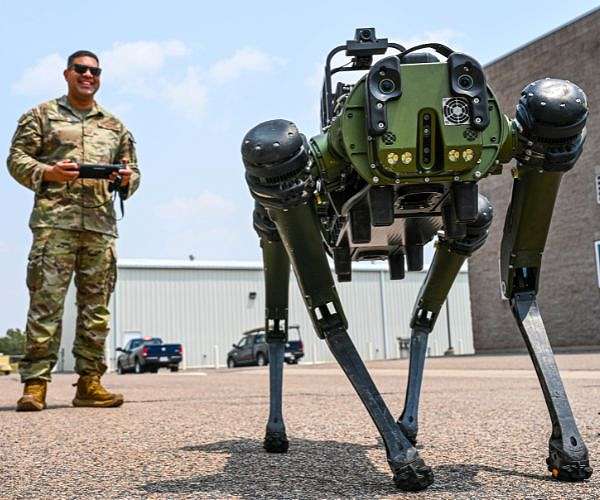
The ongoing conflict involving the United States, Israel, and Iran has seen a significant shift in warfare tactics, with artificial intelligence (AI) playing a pivotal role in intelligence gathering and target selection. This deployment of AI technology has sparked a heated debate regarding its implications and effectiveness in military operations.
Reports indicate that various forms of AI have been utilized to guide military actions, including the Israeli campaign in Gaza and the American operation aimed at capturing Venezuelan leader Nicolas Maduro. Experts assert that AI has been instrumental in selecting targets for the extensive US and Israeli strikes against Iran since February 28, although specific applications of the technology remain unconfirmed.
The Role of AI in Modern Warfare
Laure de Roucy-Rochegonde, an expert from the French think tank IFRI, emphasizes that every significant military power is heavily investing in AI for military applications. She notes that AI can enhance nearly every military function, from logistics and reconnaissance to information warfare and cybersecurity. Additionally, AI is integrated into semi-autonomous attack drones and various weapon systems.
One of the most notable advantages of AI in military operations is its ability to shorten the so-called "kill chain," which refers to the time and decision-making process involved in detecting a target and executing a strike. The US military employs the Maven Smart System (MSS), developed by Palantir, which claims to identify and prioritize potential targets efficiently. Recently, it was reported that Anthropic's Claude generative AI model has been incorporated into Maven, enhancing its detection and simulation capabilities.
AI algorithms significantly improve the speed and comprehensiveness of information handling. Bertrand Rondepierre, head of the French army's AI agency AMIAD, explains that AI can analyze vast amounts of data, including satellite images, radar signals, and real-time video, providing military forces with crucial insights for decision-making.
Ethical and Legal Concerns
Despite the advantages, the use of AI in warfare raises serious ethical and legal questions, particularly regarding human oversight and accountability. The recent conflict in Gaza highlighted these concerns, as Israeli forces employed a program known as "Lavender" to identify targets within a defined margin of error. De Roucy-Rochegonde points out that this application was effective due to its limited operational area, supported by a mass surveillance system that could gather data on the enclave's residents.
In contrast, she suggests that a similar surveillance infrastructure may not be in place for Iran. The implications of AI miscalculations were underscored by a reported bombing of an Iranian school, which local authorities claim resulted in 150 fatalities. This incident raises questions about potential AI targeting errors and the accountability of military actions. Peter Asaro, chair of the International Committee for Robot Arms Control (ICRAC), emphasizes the ambiguity surrounding responsibility in such cases, questioning whether the fault lies with human operators or the AI systems themselves.
Rondepierre asserts that the notion of AIs operating independently without human control is more fiction than reality. He stresses that military commanders are integral to the operation and design of these AI systems, with no decision-maker willing to deploy AI without a thorough understanding of its capabilities and risks. This perspective highlights the importance of human oversight in AI-driven military strategies.
Future of AI in Military Operations
Experts believe that the current integration of AI in military operations is only the beginning. Benjamin Jensen from the Center for Strategic and International Studies (CSIS) notes that while AI has been tested in military decision-making over the past decade, the global armed forces have yet to fundamentally rethink their operational strategies to fully leverage AI's potential. He suggests that it may take a generation for military organizations to effectively integrate AI into their planning and execution processes.
As the conflict involving the US, Israel, and Iran evolves, the role of AI in warfare will continue to be scrutinized. The balance between leveraging advanced technology for military advantage and maintaining ethical standards and accountability will be a critical issue for military leaders and policymakers alike. The implications of AI in warfare are profound, and as technology advances, the necessity for clear guidelines and oversight will become increasingly important.
Frequently asked questions
- How is AI being used in military operations?
- AI is used to analyze data, identify targets, and streamline decision-making processes in military operations, enhancing the speed and effectiveness of strikes.
- What are the ethical concerns surrounding AI in warfare?
- The ethical concerns include questions of accountability, human oversight, and the potential for AI to make errors in targeting, which could lead to civilian casualties.
- What is the future of AI in military strategy?
- Experts suggest that it will take a generation for military organizations to fully integrate AI into their operational strategies, as they continue to explore its capabilities and implications.
Related stories
AI & art news in your inbox, daily
The day's top stories, summarized. Free, no spam, unsubscribe anytime.