
Pope Leo XIV Calls for Global Treaty to Restrict Autonomous Weapons in New Encyclical
Naturalnews.com · View original source
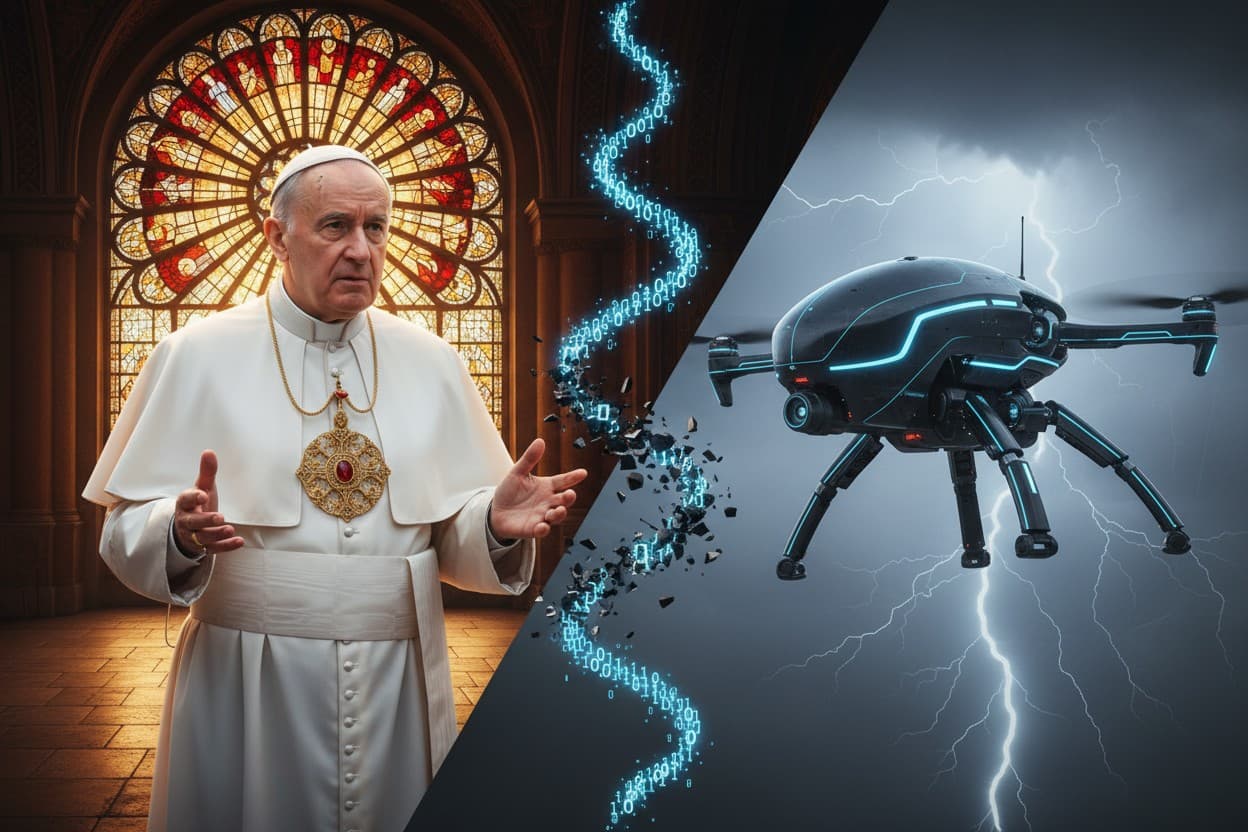
Pope Leo XIV has made a significant intervention in the discourse surrounding military artificial intelligence (AI) with the release of his latest encyclical, presented at a Vatican press conference on May 25. This document calls for a global treaty aimed at restricting the development and use of autonomous weapons, drawing parallels to the Catholic Church's historical advocacy for nuclear disarmament. The encyclical, titled "Magnifica humanitas," highlights the ethical concerns surrounding the militarization of AI and the implications it holds for global peace and human dignity.
Ethical Concerns in Military AI
In his encyclical, Pope Leo XIV articulates a grave warning regarding the normalization of warfare facilitated by advancements in military technology. He asserts that the "growth of the military-industrial complex has become a defining feature of the current political landscape," leading to a concerning revival of war as a tool of international politics. The Pope emphasizes that the development of AI in warfare must adhere to stringent ethical constraints to ensure respect for human dignity and the sanctity of life. He firmly states that it is "not permissible to entrust lethal or otherwise irreversible decisions to artificial systems," advocating for a clear "chain of responsibility" among those who design, train, authorize, and deploy such technologies.
Moreover, the encyclical condemns the use of AI for purposes of "domination, exclusion, and death." The Pope draws a direct analogy between AI weapons and nuclear arms, suggesting that both should only be developed for the benefit of humanity and never as instruments of war. This perspective challenges the traditional "just war" theory, which the encyclical deems outdated in the context of modern autonomous warfare, highlighting the urgent need for a reevaluation of ethical frameworks governing military engagements.
Critique of Technology Firms and Military Practices
While the encyclical does not name specific technology companies, it notes a troubling shift of power from nation-states to major economic and technological entities. The document references Palantir, a company whose AI-powered data analytics software has been employed by the U.S. military and the Israel Defense Forces. A particularly harrowing incident cited involved Palantir's software allegedly designating a girls' elementary school in Minab, Iran, as a valid military target based on outdated maps, resulting in a tragic missile strike that claimed the lives of over 160 schoolgirls.
This incident underscores the Pope's concerns about the increasing role of technology firms in military operations, a trend that has been exacerbated by companies like Google, which recently reversed its ban on utilizing AI for weapons and surveillance. The encyclical arrives at a time when countries like China are actively developing autonomous war machines, while Ukraine has emerged as a leader in autonomous drone technology amid its ongoing conflict with Russia. The implications of these developments are profound, as they raise questions about accountability and ethical responsibility in the use of technology for military purposes.
Divergent Views Among Industry Leaders
The release of the encyclical has sparked contrasting reactions among leaders in the AI industry. Palantir CEO Alex Karp has publicly stated that American technology companies have an "affirmative obligation" to support the U.S. military, advocating for the remilitarization of Germany and Japan. This stance aligns with a broader movement among defense technology firms to expand military applications of AI.
Conversely, Christopher Olah, co-founder of Anthropic, met with Pope Leo XIV shortly after the encyclical's release and expressed that regulating the AI industry is a "moral imperative of historic proportions." Olah highlighted the conflicting incentives that AI laboratories face, which can sometimes hinder ethical decision-making. Anthropic has previously refused to allow its technology to be used in mass domestic surveillance or fully autonomous weapons, leading to the cancellation of Pentagon contracts during the Trump administration.
Conclusion: A Call for Global Ethical Oversight
The encyclical positions the Vatican as a moral authority advocating for ethical oversight in the development of military AI. Pope Leo XIV's warnings resonate with historical papal concerns about technology but focus specifically on the dangers posed by autonomous weapons. The document's call for a global treaty to "disarm" artificial intelligence reflects an urgent need for collective action against the unchecked militarization of technology.
As nations continue to invest heavily in autonomous systems, the encyclical serves as a reminder that technological advancement must be coupled with moral responsibility. The ongoing discussions among governments, technology firms, and religious leaders regarding AI regulation are becoming increasingly critical, with the Pope's intervention adding a significant ethical dimension to these debates. The challenge remains to balance the momentum of the military-industrial complex with the imperative of safeguarding human dignity and promoting peace in an era defined by rapid technological change.
Frequently asked questions
- What is the main focus of Pope Leo XIV's encyclical?
- The encyclical focuses on the ethical implications of military AI and calls for a global treaty to restrict the development and use of autonomous weapons.
- How does the encyclical relate to past papal advocacy?
- The encyclical draws parallels to the Catholic Church's previous advocacy for nuclear disarmament, positioning the Vatican as a moral voice against the militarization of technology.
- What are the contrasting views among AI industry leaders regarding military applications?
- Palantir's CEO supports military collaboration, while Anthropic's co-founder advocates for ethical regulations in AI development, highlighting a divide in the industry.
Related stories
AI & art news in your inbox, daily
The day's top stories, summarized. Free, no spam, unsubscribe anytime.