
Nvidia AI Chip Sales to China Face New U.S. Export Restrictions
Naturalnews.com · View original source
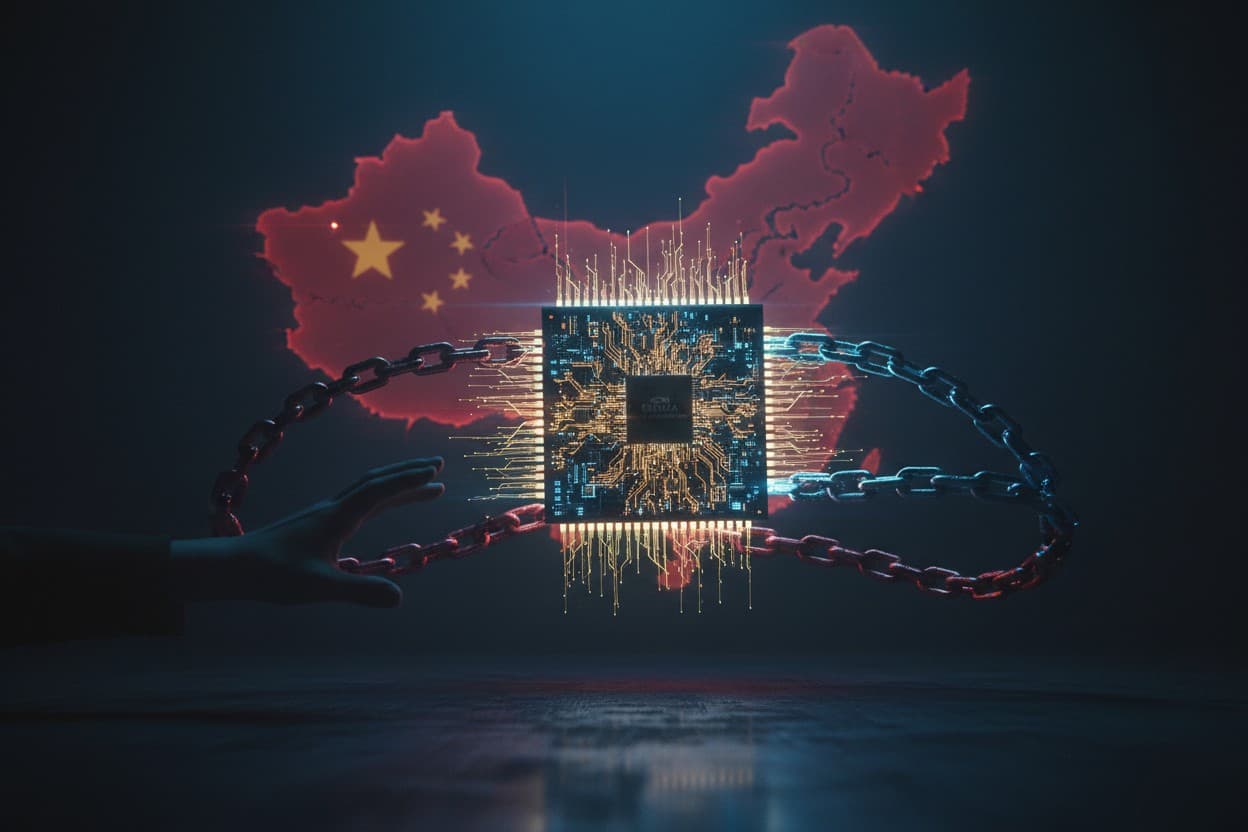
In a significant move reflecting ongoing geopolitical tensions, the U.S. government has announced new export restrictions on advanced semiconductor technologies, specifically targeting Nvidia's AI chips destined for China. These restrictions expand the definition of controlled semiconductors to encompass chips utilized for artificial intelligence (AI) training and supercomputing, citing national security concerns. The implications of these measures are profound, as they not only affect Nvidia's operations but also have broader repercussions for the global semiconductor landscape and China's AI ambitions.
Scope of New Restrictions
The guidance issued by the U.S. Commerce Department on May 31 stipulates that export licenses are now mandatory for any company headquartered in China or Macau, irrespective of the location of their affiliates. This regulatory change aims to prevent Chinese firms, including major players like Huawei and Semiconductor Manufacturing International Corp. (SMIC), from acquiring advanced Nvidia chips through third-party intermediaries. The restrictions specifically target Nvidia's Blackwell processors, which are recognized as some of the most powerful AI accelerators available in the market.
In response to these tightened controls, Chinese companies have intensified their efforts to secure Nvidia chips through alternative channels. Notably, ByteDance, the parent company of TikTok, has reportedly acquired approximately $2.5 billion worth of Nvidia Blackwell servers via routes through Singapore and Malaysia. This indicates a strategic pivot by Chinese firms to circumvent U.S. restrictions while still attempting to access cutting-edge technology.
The legislative landscape in the U.S. is also evolving, with lawmakers introducing bipartisan initiatives such as the Chip Security Act. This proposed legislation aims to enforce firmware-based verification and impose stricter penalties for smuggling activities, highlighting the increasing scrutiny on technology transfers to China. In a related incident, two Chinese nationals were charged in August 2025 for attempting to smuggle AI chips from Southern California to China, underscoring the seriousness of the U.S. government's stance on semiconductor exports.
Nvidia's Response
Nvidia has publicly stated its commitment to complying with U.S. export controls, emphasizing that national security takes precedence over commercial interests. During the company's annual meeting on June 24, CEO Jensen Huang reiterated that attempts to establish data centers using smuggled chips are futile, as Nvidia does not provide support or repairs for such products. Furthermore, Huang has urged server manufacturer Super Micro Computer to bolster its internal compliance measures amid ongoing investigations into alleged chip smuggling activities directed towards China.
Despite these challenges, Nvidia has previously developed modified chips for the Chinese market that adhere to export regulations, such as the H200, which is currently the most advanced AI chip legally available to Chinese companies. However, the newly imposed restrictions are anticipated to have a significant impact on Nvidia's financial performance. The company has warned that these export controls could lead to a revenue decline of several billion dollars in the current quarter. Following the initial tightening of rules in January 2025, Nvidia's stock experienced a nearly 2% drop, reflecting investor concerns about the financial implications of these export restrictions.
Impact on China's AI Sector
The export controls are catalyzing China's efforts to achieve semiconductor self-reliance. Chinese state media has reported that the restrictions are likely to stimulate domestic innovation, prompting local firms to invest heavily in developing homegrown alternatives. For instance, Huawei is currently testing its Ascend 910D AI chip, which has the potential to surpass Nvidia's H100 in computational power, albeit with higher energy consumption and lower efficiency.
Moreover, Chinese electric vehicle manufacturers are increasingly turning to proprietary chips, with Li Auto recently introducing the Mach M100 5-nanometer chip, capable of delivering 1,280 trillion operations per second, thereby reducing reliance on Nvidia technology. At the national level, China has announced plans to invest approximately $295 billion over the next five years to construct a comprehensive network of interconnected data centers, further bolstering its domestic AI capabilities.
As a result of these developments, analysts have noted the emergence of Chinese firms such as Cambricon and Horizon Robotics as potential competitors to Nvidia in the domestic AI chip market. Additionally, the Chinese government has restricted overseas travel for top AI specialists, designating them as national-security assets, which could further enhance domestic capabilities.
Outlook
Looking ahead, the U.S. export controls are expected to remain in effect for the foreseeable future, with the potential for further expansion as the U.S. government continues to monitor China's semiconductor acquisition strategies. The Commerce Department has indicated that additional measures may be introduced to close any remaining loopholes in the current regulations. Despite the challenges posed by these restrictions, Nvidia's first-quarter revenue for fiscal 2027 rose 85% year-over-year to $81.6 billion, showcasing the company's resilience in a turbulent market.
The broader context of U.S.-China technological rivalry remains tense, with no significant breakthroughs achieved in recent diplomatic engagements. As both nations invest heavily in AI infrastructure, the competition for semiconductor supply is expected to intensify, with significant implications for global technology supply chains and the future of AI development worldwide.
Frequently asked questions
- What are the new U.S. export restrictions on Nvidia chips?
- The new restrictions require export licenses for any entity headquartered in China or Macau, targeting advanced AI chips like Nvidia's Blackwell processors.
- How has Nvidia responded to the export restrictions?
- Nvidia has stated it complies with U.S. export controls and prioritizes national security, warning that smuggled chips will not receive support.
- What impact will the restrictions have on China's AI sector?
- The restrictions are pushing China to invest heavily in domestic semiconductor development, aiming for self-reliance in AI technologies.
Related stories
AI & art news in your inbox, daily
The day's top stories, summarized. Free, no spam, unsubscribe anytime.