
NVIDIA Achieves Leading Agentic Coding Performance on First Agentic AI Benchmark
Nvidia.com · View original source
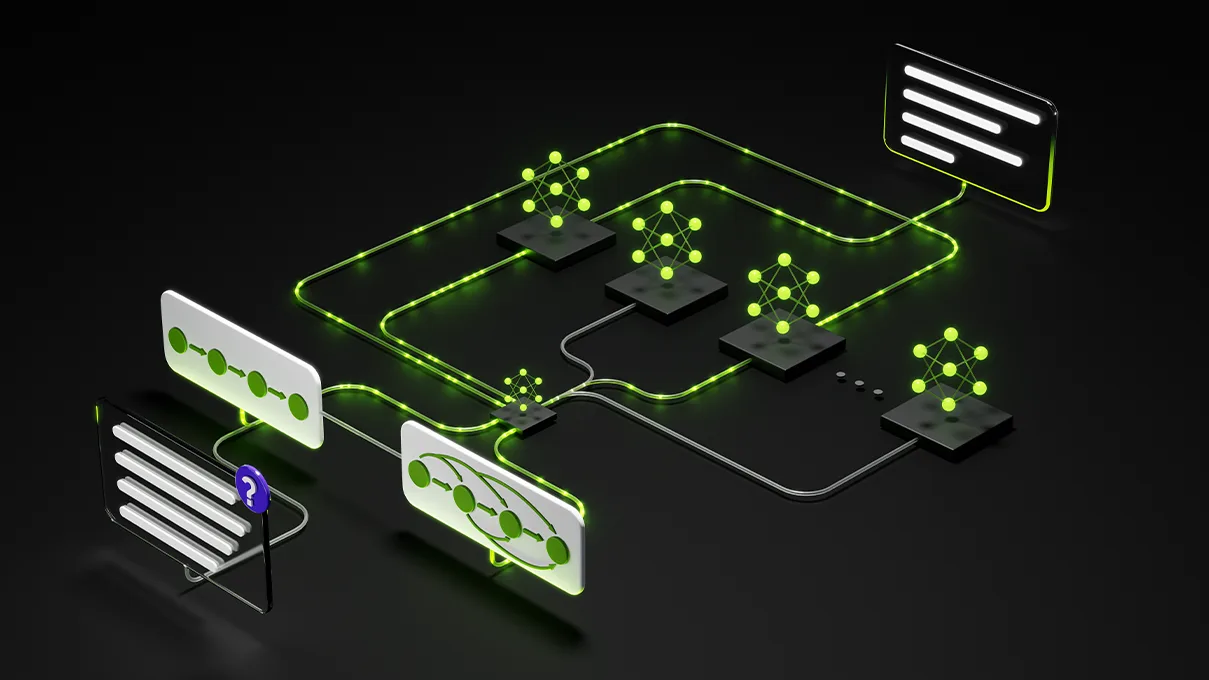
NVIDIA has recently made significant strides in the realm of artificial intelligence by achieving leading performance in agentic coding through the introduction of the Artificial Analysis AgentPerf (AA-AgentPerf) benchmark. This benchmark represents a pivotal moment in the industry, as it establishes the first multi-vendor open standards for evaluating the performance of inference systems specifically tailored for AI agents. By addressing the complexities associated with inference workloads, NVIDIA showcases its commitment to advancing AI technology and enhancing the capabilities of AI agents in coding tasks.
Understanding AA-AgentPerf
The AA-AgentPerf benchmark is a hardware evaluation tool developed by Artificial Analysis, designed to measure the performance of inference systems in supporting multiple concurrent AI agents while adhering to specific performance service level objectives (SLOs). An SLO is a defined threshold that indicates the expected speed of output tokens and the time taken to produce the first token (TTFT). By normalizing benchmark results per accelerator and megawatt, AA-AgentPerf allows for meaningful comparisons across different hardware configurations.
Agentic workloads present unique challenges in performance measurement due to their reliance on large language models (LLMs), which can generate unpredictable sequences of requests and tool calls. A critical aspect of evaluating agent performance is accurately capturing this non-determinism within a representative agent trajectory. This trajectory encompasses the entire sequence of actions, decisions, and observations made by an agent as it completes a task.
To effectively measure GPU performance, AA-AgentPerf utilizes prerecorded agentic coding trajectories that include interleaved reasoning and tool usage, while also simulating interturn latency against a baseline for CPU tool-call performance. These trajectories are constructed around real-world scenarios involving public code repositories and span over 12 programming languages, incorporating responses from advanced AI models. The rigorous definition of these trajectories is essential for ensuring that the benchmark results reflect actual performance in practical applications.
During benchmarking, AA-AgentPerf generates thousands of concurrent requests from its dataset of agent trajectories. To maintain the integrity of results, dynamic prefixes are added at the beginning of each trajectory phase, and strict SLO thresholds are enforced throughout the process. The benchmark records the highest level of concurrency that meets these requirements, which is then reported as the official result for each SLO tier. This systematic approach allows for a comprehensive assessment of different user experience targets.
NVIDIA's Performance Breakthrough
The core metric of AA-AgentPerf is runtime power per megawatt, which provides a practical measure for evaluating performance at the scale of data centers. NVIDIA's GB300 NVL72 has emerged as a standout performer, achieving up to 20 times more concurrent agents per megawatt compared to its predecessor, the NVIDIA H200. This remarkable improvement underscores the GB300 NVL72's capability to handle extensive agentic coding workloads efficiently, from managing long-lived sessions to optimizing the utilization of mixture of experts (MoEs) and GPUs across numerous concurrent agent sessions.
The introduction of AA-AgentPerf not only sets a new benchmark for agentic inference evaluation but also highlights the importance of tightly integrated hardware and software in unlocking significant gains in concurrency and efficiency. The results from this benchmark demonstrate how advancements in technology can lead to transformative improvements in AI performance.
Looking ahead, NVIDIA plans to further enhance these capabilities with the upcoming Vera Rubin platform. This platform is anticipated to leverage 50 PFLOPs of NVFP4 compute power and utilize the Vera CPU to accelerate LLM tool calls, ultimately improving the overall performance, economics, and efficiency of agentic workflows. By continuing to innovate in this space, NVIDIA aims to meet the growing demands of increasingly complex agentic systems.
Why it matters
The introduction of the AA-AgentPerf benchmark and NVIDIA's advancements in agentic coding performance represent a significant leap forward for both creators and technologists in the AI field. For creators, this means access to more powerful tools that can handle complex coding tasks with greater efficiency, enabling them to focus on innovation rather than technical limitations.
For technologists, the establishment of a standardized benchmark for agentic workloads provides a clear framework for evaluating and comparing different systems. This clarity can drive further innovation and competition within the industry, ultimately leading to enhanced capabilities and performance across various applications of AI agents. As AI continues to evolve, the ability to measure and improve performance will be crucial in harnessing its full potential for creative and technological advancements.
Frequently asked questions
- What is AA-AgentPerf?
- AA-AgentPerf is a hardware benchmark created by Artificial Analysis that measures the performance of inference systems in supporting multiple concurrent AI agents while meeting specific performance service level objectives.
- How does AA-AgentPerf measure performance?
- It measures performance by evaluating the number of concurrent agents an inference system can support while adhering to defined SLOs for output token speed and time-to-first-token.
- What improvements does the GB300 NVL72 offer?
- The GB300 NVL72 delivers up to 20 times more concurrent agents per megawatt than the previous generation, showcasing its capability to efficiently handle large-scale agentic coding workloads.
Related stories
AI & art news in your inbox, daily
The day's top stories, summarized. Free, no spam, unsubscribe anytime.