
Normal Computing raises $50M to tackle the soaring energy demands of AI chips
SiliconANGLE News · View original source
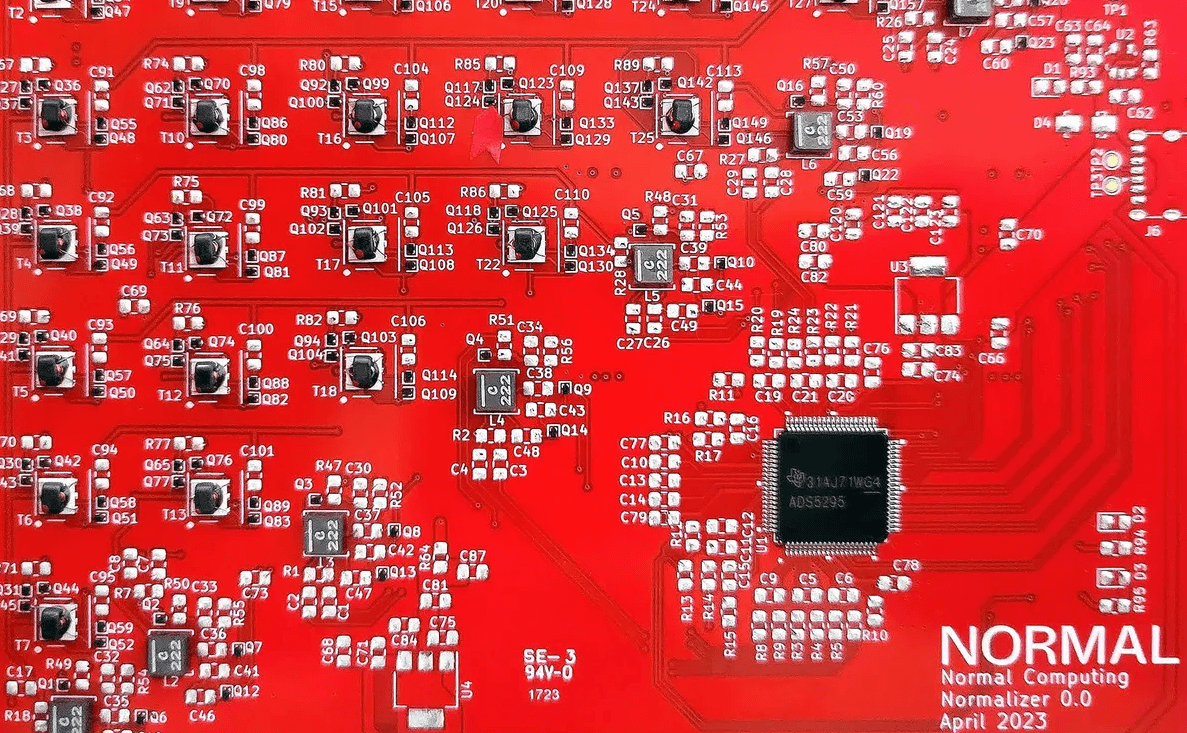
Normal Computing Corp., a pioneering startup focused on redefining the fundamental physics of artificial intelligence, has successfully raised $50 million in a recent funding round led by Samsung Catalyst. This investment marks a significant milestone for the company, which has now accumulated over $85 million in total funding since its inception.
The latest funding round also saw contributions from various investors, including Galvanize, Brevan Howard Macro Venture Fund, and ArcTern Ventures, along with existing supporters such as Celesta Capital, Drive Capital, Micron Ventures, and Eric Schmidt’s First Spark Ventures. This influx of capital is aimed at addressing what Normal Computing identifies as a critical challenge facing the AI industry today.
As artificial intelligence models continue to expand in size and complexity, the energy demands of the chips that power these models are escalating dramatically. Faris Sbahi, the CEO of Normal Computing, warns that the industry is nearing an “energy wall,” where conventional graphics processing units (GPUs) will require energy levels that are not only unsustainable but also impractical to maintain.
To counteract this looming crisis, Normal Computing is pursuing a dual approach. Firstly, the company aims to revolutionize the design of silicon chips. Secondly, it plans to develop a new type of processor that aligns with the laws of physics rather than resisting them. This innovative vision is rooted in a desire to create chips that are not only more efficient but also more sustainable in the long term.
A key component of Normal's strategy is the development of the Normal EDA (Electronic Design Automation) platform. This platform is currently utilized by half of the world’s top ten semiconductor design firms, indicating its growing influence in the industry. The Normal EDA platform leverages a cutting-edge AI technique known as “auto-formalization,” which integrates large language models with formal logic. This combination enables engineers to design, optimize, and validate their silicon designs more effectively.
The underlying principle of the Normal EDA platform is to allow AI to comprehend the intentions behind new chip designs. By doing so, it can propose more efficient methodologies and reduce development times significantly—from years to mere months. According to Sbahi, the platform is designed to meet the increasing demands for “intelligence-per-dollar-per-watt,” aiming to accelerate custom silicon to market at double the current pace and ultimately achieve a staggering 1,000-fold increase in efficiency over time.
However, the more ambitious aspect of Normal’s vision extends beyond merely redesigning chip architecture; it seeks to fundamentally alter the computational processes of these chips. Traditional silicon chips rely on maintaining transistors in fixed “0” or “1” states, which consumes vast amounts of energy. In contrast, Normal Computing's approach incorporates thermodynamic cooling techniques that embrace the inherent randomness of physical systems.
By treating this randomness as a beneficial feature, Normal’s application-specific integrated circuits (ASICs) can utilize thermal dynamics to perform computations more efficiently. Unlike conventional GPUs that expend significant energy suppressing noise to achieve perfect states, Normal’s ASICs allow for natural fluctuations, harnessing this noise to enhance computational performance.
Normal Computing has already made strides in this direction, having developed the world’s first thermodynamic computing chip, named CN101. This chip represents a crucial step toward the company's ambitious goal of achieving 1,000 times the energy efficiency of current technologies.
In collaboration with the U.K.’s Advanced Research and Invention Agency (ARIA), Normal is conducting research to further its thermodynamic chip architecture. Suraj Bramhavar, director of ARIA’s Scaling Compute program, emphasizes the importance of moving beyond incremental performance improvements in the chip industry. He is enthusiastic about working with Normal due to its unconventional approach and the successful development of the CN101 chip, which he notes is an exceptionally rare achievement for such ambitious work.
Why it matters
The advancements made by Normal Computing have significant implications for both creators and technologists in the AI field. As the demand for more powerful AI models continues to rise, the energy requirements of traditional computing hardware pose a major challenge. Normal's innovative approach could provide a sustainable solution, enabling the development of more efficient chips that can support the next generation of AI applications without overwhelming energy resources.
Furthermore, the integration of AI into chip design through the Normal EDA platform represents a transformative shift in how semiconductor companies approach their work. By reducing development times and enhancing design accuracy, this technology could accelerate the pace of innovation in the industry, allowing for quicker deployment of advanced AI capabilities.
In summary, Normal Computing's efforts to address the energy demands of AI chips not only highlight the urgent need for sustainable solutions but also showcase the potential of innovative technologies to reshape the landscape of artificial intelligence and semiconductor design. As the company continues to push the boundaries of what is possible, it may well set a new standard for efficiency and performance in the AI hardware space.
Frequently asked questions
- What is Normal Computing's main goal?
- Normal Computing aims to reinvent the fundamental physics of artificial intelligence by developing more energy-efficient chips and transforming chip design.
- What is the Normal EDA platform?
- The Normal EDA platform is an electronic design automation tool that uses AI to help semiconductor firms design and optimize silicon chips more effectively.
- What is the significance of the CN101 chip?
- The CN101 chip is the world's first thermodynamic computing chip developed by Normal Computing, representing a crucial step toward achieving significantly higher energy efficiency in computing.
Related stories
AI & art news in your inbox, daily
The day's top stories, summarized. Free, no spam, unsubscribe anytime.