
Marvell, Synopsys close lower despite expectation-topping earnings buoyed by AI
SiliconANGLE News · View original source
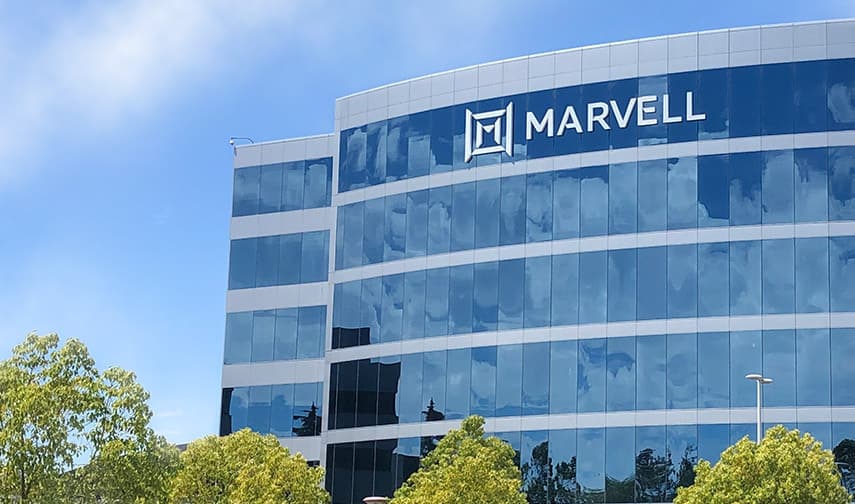
In a notable development within the semiconductor industry, Marvell Technology Inc. and Synopsys Inc. have reported quarterly earnings that exceeded analyst expectations, driven by the burgeoning demand for artificial intelligence (AI) infrastructure. Despite this positive news, both companies experienced declines in their stock prices, closing down 4.6% and 1.6%, respectively, which raises questions about market sentiment in the face of strong financial performance.
Marvell's Performance and Growth Drivers
Marvell's first-quarter results showcased an adjusted profit of 80 cents per share, aligning with analysts' forecasts. The company reported a significant revenue increase of 28% year-over-year, reaching $2.41 billion, surpassing its own projections by $18 million and slightly exceeding the consensus estimate. A key factor contributing to this robust performance was Marvell's optical networking division, which produces digital signal processors. These chips are crucial for converting electrical data into light signals suitable for fiber-optic transmission, a technology that is increasingly vital in AI data centers due to its speed advantages over traditional copper wiring.
In addition to its optical networking products, Marvell has been proactive in the chip design sector, allowing clients to commission custom processors that integrate co-packaged optics (CPO) technology. This innovation is anticipated to lower the costs associated with establishing fiber-optic networks for AI applications. Looking ahead, Marvell is optimistic about the demand for optical equipment, raising its revenue guidance for the fiscal year to $11.5 billion, which represents a 40% increase compared to previous expectations of $11 billion. CEO Matt Murphy highlighted that this optimistic outlook is fueled by strong demand across a diverse range of Marvell solutions, including advanced optical technologies and custom chip solutions.
Synopsys' Strong Showing
Similarly, Synopsys has benefited from the AI surge, reporting sales of $2.27 billion, exceeding analyst expectations of $2.25 billion, and representing a remarkable 42% increase from the previous year. The company's growth is attributed to its flagship suite of chip design applications and pre-packaged semiconductor designs. Furthermore, Synopsys competes in the broader engineering software market through its Ansys subsidiary, which provides tools for designing a variety of products, including automotive engines and quantum computers.
In terms of profitability, Synopsys generated an adjusted profit of $643.7 million for the second quarter of its 2026 fiscal year, translating to earnings of $3.35 per share, surpassing the anticipated $3.17 per share. CEO Sassine Ghazi noted that the demand for AI is driving not only semiconductor demand but also increasing the architectural complexity of chips and the systems they power. This trend is creating a favorable environment for sustained growth and margin expansion for the company.
Synopsys has also revised its full-year earnings target upward to $14.76 per share, with expectations that this increase will stem from cost reductions and synergies related to its Ansys division. Additionally, the company has raised its revenue guidance to a midpoint of $9.66 billion for the year.
Why it matters
The earnings reports from Marvell and Synopsys underscore a pivotal moment for the semiconductor industry, particularly in the context of AI's rapid expansion. The strong financial results indicate a healthy demand for advanced semiconductor solutions, especially those tailored for AI applications. However, the decline in stock prices despite positive earnings raises concerns about investor sentiment and market expectations, suggesting that the market may be cautious about the sustainability of this growth.
For creators and technologists, these developments highlight the importance of staying informed about advancements in semiconductor technology, particularly as they relate to AI. The increased demand for optical networking and custom chip designs presents opportunities for innovation and collaboration in the tech space. As companies like Marvell and Synopsys continue to evolve their offerings, there may be new avenues for creators to explore, particularly in the realms of AI-driven applications and infrastructure.
In summary, while Marvell and Synopsys have reported impressive earnings driven by AI demand, the market's reaction reflects a complex interplay of expectations and realities within the semiconductor sector. As the industry continues to adapt and grow, stakeholders must remain vigilant in navigating these changes and leveraging emerging opportunities.
Frequently asked questions
- What were Marvell's earnings for the first quarter?
- Marvell reported an adjusted profit of 80 cents per share and revenue of $2.41 billion for the first quarter.
- How did Synopsys perform in its latest earnings report?
- Synopsys reported sales of $2.27 billion, exceeding expectations, and generated an adjusted profit of $643.7 million.
- What is the significance of optical networking in AI?
- Optical networking is crucial for AI data centers as it allows for faster data transmission compared to traditional copper wiring, enhancing overall performance.
Related stories
AI & art news in your inbox, daily
The day's top stories, summarized. Free, no spam, unsubscribe anytime.