
International Workshop on AI-Driven Semiconductor and Energy Efficient Hardware, Concludes Successfully at T-Hub, Hyderabad
Businessnewsthisweek.com · View original source
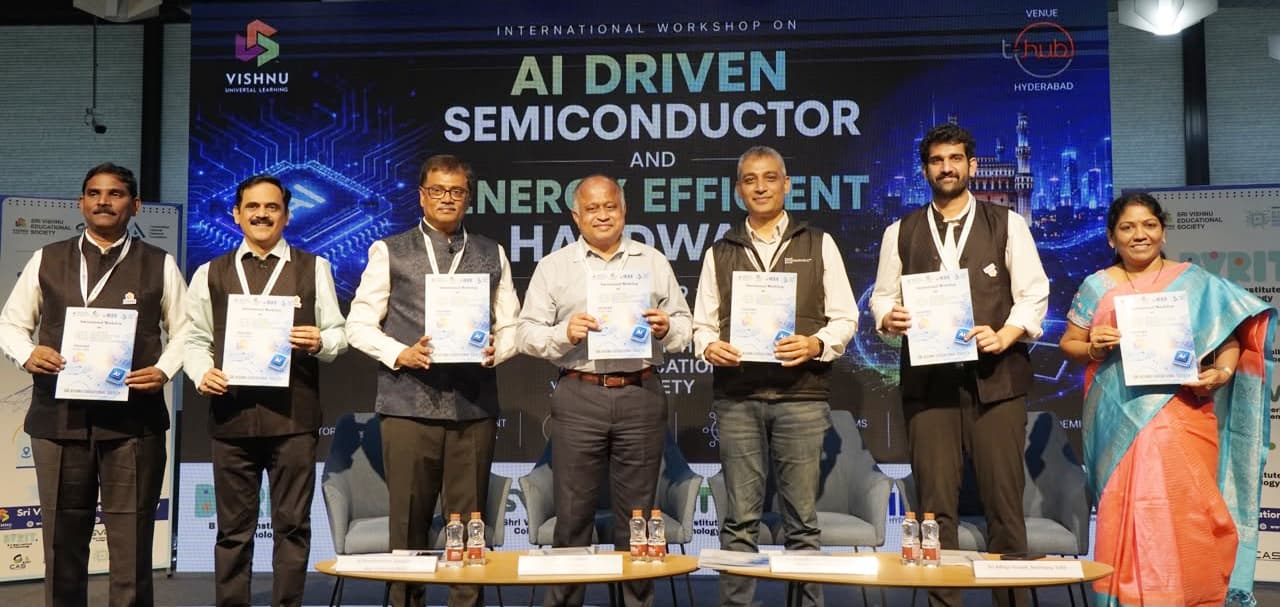
The recent International Workshop on Artificial Intelligence Driven Semiconductor and Energy Efficient Hardware, held on July 7-8, 2026, at T-Hub in Hyderabad, marked a significant gathering of over 350 participants from academia, industry, and policy-making sectors. Organized by the Sri Vishnu Educational Society (SVES) and supported by Penn State University, the workshop aimed to explore the rapidly evolving landscape of artificial intelligence (AI), semiconductor technologies, and energy-efficient hardware systems. The event not only showcased the advancements in these fields but also emphasized the importance of collaboration between educational institutions and industry leaders to foster innovation and skill development.
Workshop Overview
The workshop featured a diverse lineup of speakers and panel discussions that delved into various aspects of AI and semiconductor technologies. Inaugurated by Mr. Aditya Vissam, Secretary of SVES, the event set an optimistic tone with a focus on the transformative initiatives undertaken by SVES. Vissam highlighted the necessity for educational institutions to adapt to the demands of the AI era, advocating for the integration of AI in teaching, research, and skill development. He underscored the burgeoning opportunities in India’s semiconductor sector, particularly in chip design and manufacturing, urging engineering graduates to acquire relevant competencies to thrive in this evolving landscape.
The first day of the workshop featured a keynote address from Prof. Madhavan Swami Nathan of Penn State University, who discussed the future of 3D Heterogeneous Integration and its pivotal role in next-generation semiconductor systems. Technical sessions included presentations from industry experts such as Mrs. Nupur Shah and Mr. Navin Bishnoi from Marvell Technology, who explored topics ranging from AI-enabled network transformation to advanced packaging techniques. The day also included a panel discussion on the “Education, Research, and Innovation Ecosystem for VLSI & Semiconductors,” which focused on enhancing India’s semiconductor ecosystem through collaborative research efforts and partnerships between academia and industry.
The second day continued with advanced technical sessions led by notable speakers, including Prof. Rohit Sharma from IIT Ropar and Dr. Yutaka Uematsu from Hitachi, Japan. Discussions revolved around cutting-edge topics such as signal and thermal co-design, graphene-based terahertz photonics, and MEMS technologies. One of the standout sessions was a panel discussion titled “From Silicon to Systems: Power-Aware AI Computing through Algorithm and Hardware Co-Optimization,” which emphasized the importance of sustainable AI hardware development.
Implications for the Future
The successful conclusion of the workshop not only provided a platform for knowledge exchange but also highlighted the critical role that collaboration plays in advancing semiconductor technologies and AI-driven hardware systems. By bringing together experts from various fields, the event fostered an environment conducive to innovation and skill development, which is essential for meeting the demands of the rapidly evolving tech landscape.
For creators and technologists, the discussions and insights shared during the workshop underscore the importance of staying abreast of emerging technologies and trends in the semiconductor industry. As India positions itself as a global player in semiconductor manufacturing, professionals in the field must adapt and innovate to leverage the opportunities presented by advancements in AI and energy-efficient hardware.
Moreover, the emphasis on collaboration between educational institutions and industry leaders suggests a pathway for future initiatives aimed at bridging the gap between theoretical knowledge and practical application. This collaborative approach is vital for nurturing the next generation of engineers and technologists who will drive innovation in semiconductor technologies and AI systems.
The workshop's focus on sustainability and energy efficiency also reflects a growing awareness of the environmental impact of technology. As AI and semiconductor technologies continue to evolve, the integration of sustainable practices will be essential for ensuring that advancements do not come at the expense of ecological integrity.
In conclusion, the International Workshop on AI-Driven Semiconductor and Energy Efficient Hardware served as a pivotal event for fostering dialogue and collaboration among key stakeholders in the semiconductor ecosystem. The insights gained and connections made during this workshop are likely to influence the future trajectory of semiconductor technologies and AI-driven hardware systems in India and beyond.
The event concluded with a Vote of Thanks by Dr. Sanjay Dubey, Principal of BVRIT, who expressed gratitude to all participants and speakers for their contributions, marking the workshop as a grand success.
Frequently asked questions
- What was the purpose of the workshop?
- The workshop aimed to explore advancements in AI-driven semiconductor technologies and energy-efficient hardware, fostering collaboration among academia, industry, and policymakers.
- Who organized the workshop?
- The workshop was organized by the Sri Vishnu Educational Society (SVES) with support from Penn State University and other institutions.
- What topics were discussed during the workshop?
- Topics included AI-enabled network transformation, semiconductor innovation, edge computing, and sustainable AI hardware development.
Related stories
AI & art news in your inbox, daily
The day's top stories, summarized. Free, no spam, unsubscribe anytime.