
How to turn your AI into a world-class designer
Lennysnewsletter.com · View original source
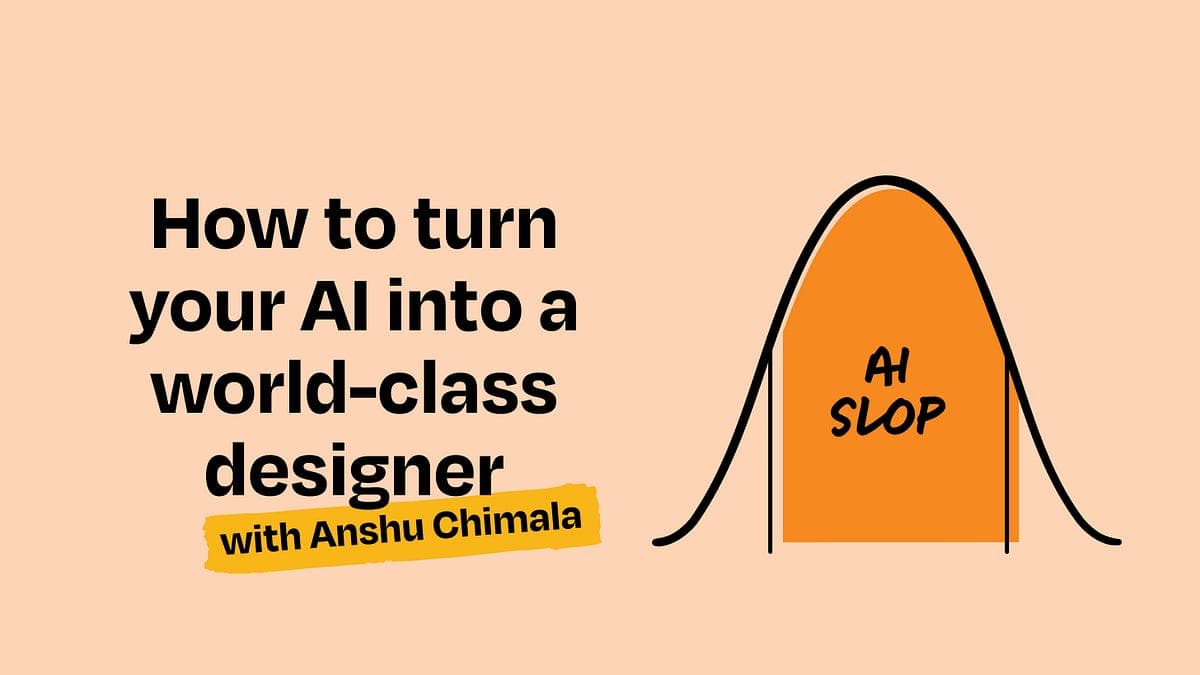
In a recent exploration of artificial intelligence's capabilities in design, Lenny from Lennysnewsletter.com reflects on the transformative potential of AI when utilized correctly. Drawing insights from Anshu Chimala, a former Apple software engineer and designer, Lenny emphasizes that many users only scratch the surface of AI's creative abilities. By applying the right techniques, creators can unlock the full spectrum of innovative design possibilities that AI can offer.
Understanding AI's Creative Limitations
Lenny begins by acknowledging a common misconception: that AI is inherently poor at design. This belief stems from the way large language models (LLMs) are trained. LLMs function as next-token predictors, generating text based on sequences they have learned from extensive datasets. While this makes them adept at many tasks, it also leads to a tendency to produce safe, predictable outputs. Consequently, designs generated by these models often lack originality and flair, resembling a product of design-by-committee rather than a unique creative vision.
For Lenny, the key to overcoming these limitations lies in pushing AI to explore beyond its default choices. He recalls his experience managing human designers at Apple, where breaking free from conventional thinking was essential for innovation. By adopting a more exploratory approach, Lenny found that AI can produce designs that are not only functional but also visually striking and emotionally resonant.
A New Framework for AI-Driven Design
To harness the full potential of AI in design, Lenny proposes a reimagined process inspired by the Double Diamond design framework. This new approach consists of three stages: discover, define, and deliver. The initial stage focuses on broad exploration, encouraging the generation of diverse ideas and bold design briefs. The second stage aims to establish a distinct design identity by challenging AI to move beyond familiar patterns. Finally, the delivery stage emphasizes refinement, ensuring that the final output is polished and impactful.
One of the primary challenges in the design process is overcoming the paralysis that comes with an empty canvas. Lenny suggests that AI can serve as a valuable tool for generating a wide array of potential directions. However, to achieve truly unique designs, users must actively encourage AI to take risks and explore uncharted territories. This can be accomplished through techniques such as the String Seed of Thought, which involves using random strings as inspiration for design decisions, thereby fostering genuine variety in outputs.
Techniques for Unique AI-Generated Designs
Lenny discusses two primary methods for prompting AI to produce more varied and innovative designs. The first method involves guiding the AI to seek inspiration from external sources rather than relying solely on its training data. For instance, by providing a random string for inspiration, designers can elicit outputs that break away from the typical patterns seen in AI-generated designs. This approach leads to a more diverse range of color schemes, layouts, and design elements.
The second method focuses on crafting specific, imaginative prompts that incorporate personal taste and unique inspirations. By describing a desired aesthetic—such as a bold pixel art theme or an asymmetric layout—designers can give AI a clearer vision to work from. This specificity helps the model make more informed decisions, resulting in outputs that reflect the creator's individual style and preferences.
Moreover, Lenny emphasizes the importance of iteration in the design process. To elevate initial AI-generated designs, he recommends employing a 'design critic'—another AI agent tasked with evaluating the aesthetic quality of the work. This critic can provide objective feedback, helping to identify areas for improvement and ensuring that the final design meets a high standard of quality.
By integrating these techniques, Lenny believes that designers can unlock a new realm of creative possibilities with AI. The key lies in actively guiding the model, embracing bold ideas, and iterating on outputs to achieve designs that are not only functional but also visually captivating.
In conclusion, Lenny's insights into AI-driven design underscore the importance of understanding the limitations of AI while simultaneously recognizing its vast potential. By adopting a structured approach and leveraging innovative prompting techniques, creators can transform AI into a powerful ally in the design process, ultimately leading to more unique and engaging outcomes.
Frequently asked questions
- What is the Double Diamond design process?
- The Double Diamond design process is a framework that consists of four phases: Discover, Define, Develop, and Deliver, which helps teams explore and refine ideas.
- How can AI improve design creativity?
- AI can enhance design creativity by generating diverse ideas and exploring unconventional directions when prompted effectively.
- What is a design critic in AI design?
- A design critic is an AI agent that evaluates the aesthetic quality of designs produced by another AI, providing feedback to improve the final output.
Related stories
AI & art news in your inbox, daily
The day's top stories, summarized. Free, no spam, unsubscribe anytime.