
encyclopedias are lying to you and weronika gęsicka proves it with hundreds of fake entries
Designboom · View original source
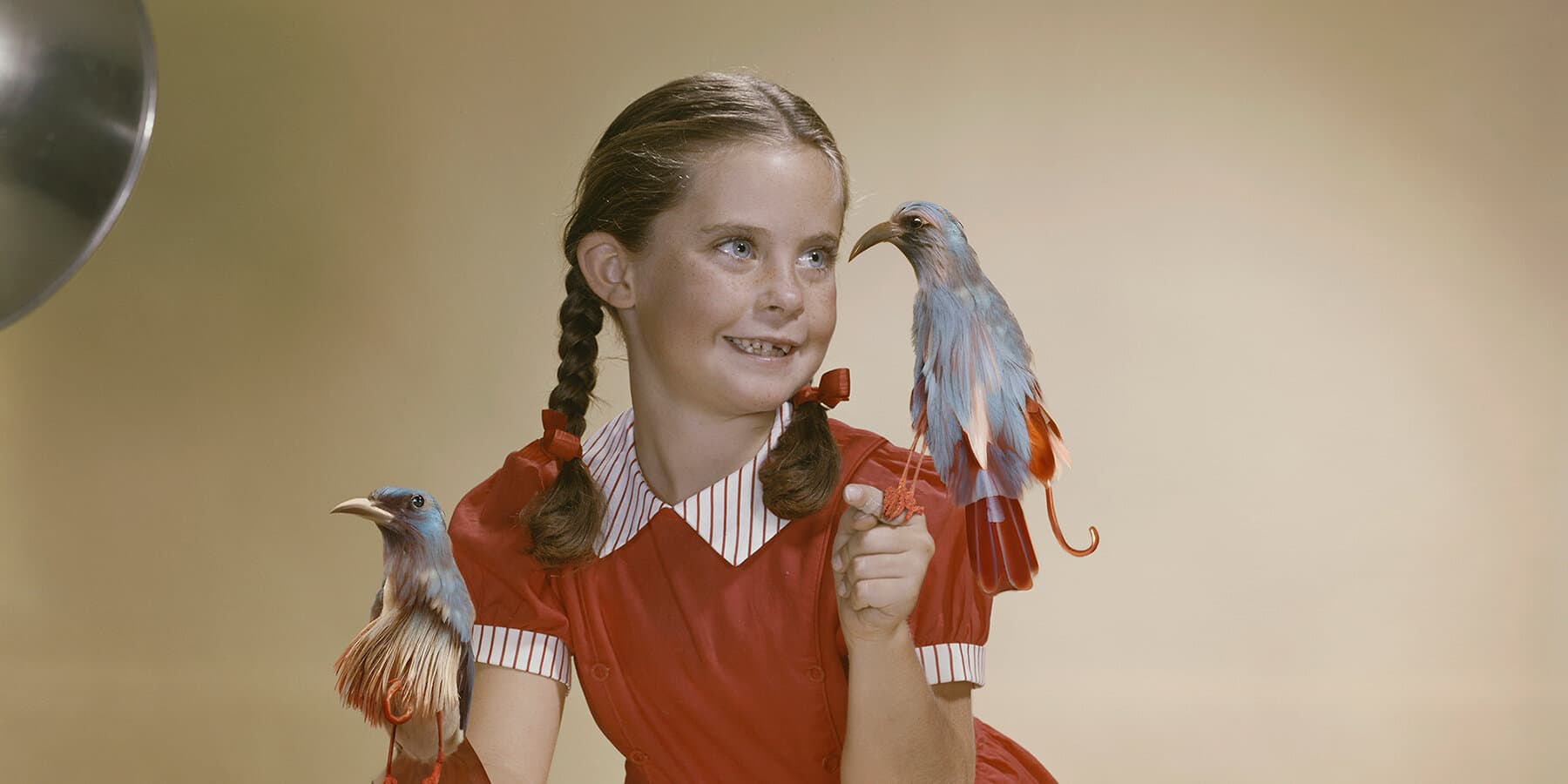
In a striking exploration of the nature of knowledge and truth, Polish artist Weronika Gęsicka presents her latest project, "Encyclopaedia." This photographic and artist book project challenges the concept of authoritative knowledge by compiling several hundred fictitious entries sourced from various encyclopedias, dictionaries, and lexicons, including Wikipedia. Each entry is illustrated with manipulated stock photographs and AI-generated imagery, creating a collection that blurs the lines between reality and fabrication.
The entries, referred to as 'trap entries,' are intentionally false records placed by editors to identify instances of plagiarism. If another publication were to reproduce the content verbatim, these fake entries would serve as evidence of copying. Gęsicka’s work excavates these entries, giving them form and presenting them in a book that initially appears entirely credible. In a world where the distinction between fact and fiction is increasingly obscured, her project raises essential questions about the nature of knowledge and how we navigate information in the digital age.
The Nature of Knowledge in a Digital Age
Gęsicka articulates that "Encyclopaedia" serves as a broader reflection on how people interact with information today. She states, "It is an attempt to consider how to function in today’s world, where we are bombarded with fake news every day, and knowledge is neither constant nor certain." This sentiment underscores the urgency of her work, as it prompts viewers to contemplate the very essence of knowledge in an era characterized by rapid changes and the constant influx of new information.
The entries Gęsicka selected vary in their degree of believability; some are immediately suspect, while others could easily deceive even the most discerning reader. They cover a range of topics, including fictitious animals, invented historical events, and non-existent objects. The book itself, comprising 252 pages and 862 images, is printed in an edition of 1,500 copies, designed to mimic the authoritative weight of traditional encyclopedias. Gęsicka’s deliberate choice of photographic imagery as the primary medium is critical to her argument. Photography, often perceived as an objective medium, carries an inherent authority that can be easily manipulated, especially in the age of artificial intelligence.
Gęsicka explains, "The intention to provoke confusion and disorientation in the viewer was also one of the reasons why I used photographs, or images that imitate photographs, in this project." This manipulation of visual trust plays a significant role in how viewers interpret the entries. The familiarity of the images—crafted from visual clichés and old-fashioned illustration styles—allows the fiction to register only after the initial impression, creating a disconcerting experience for the audience. As Gęsicka notes, the challenge of distinguishing true information from falsehood becomes increasingly daunting in a landscape where both edited photographs and AI-generated images are becoming commonplace.
The Role of Archives and Memory
Throughout her artistic career, Gęsicka has consistently engaged with archival materials, exploring the implications of historical photographs that are altered or recontextualized. She states, "My works often refer to memory and history, both in the context of the individual and in the broader sense of collective memory." This exploration of archives reveals the complexities of how history is perceived and understood, suggesting that it is not a fixed entity but rather a fluid narrative subject to reinterpretation.
In "Encyclopaedia," Gęsicka extends this impulse into the realm of encyclopedic knowledge, a genre traditionally associated with finality and consensus. By incorporating images from the past, she aims to blur the lines between reality and fiction, creating a visual experience that challenges viewers to question their assumptions about knowledge. The project arrives at a particularly relevant moment in cultural discourse, as society grapples with the implications of image manipulation and the reliability of visual evidence.
Accompanying the book is an essay by Charlotte Cotton, a renowned curator and photography theorist, which contextualizes Gęsicka’s work within broader discussions about image manipulation and the epistemology of visual evidence. Published by Blow Up Press and Jednostka Gallery in Warsaw, with design by Aneta Kowalczyk, "Encyclopaedia" not only serves as a thought-provoking artistic endeavor but also as a critical commentary on the state of knowledge in contemporary society. Gęsicka’s nomination for the Deutsche Börse Photography Foundation Prize 2026 further underscores the significance of her work in the current artistic landscape.
As Gęsicka reflects on her project, she highlights the paradox of our times: "We have more and more tools to help us separate truth from fiction, but it is becoming more and more difficult to uncover that truth." In a world where the boundaries of knowledge are continually shifting, "Encyclopaedia" stands as a compelling reminder of the need for vigilance and critical thinking in our pursuit of understanding.
Frequently asked questions
- What is the main focus of Weronika Gęsicka's project 'Encyclopaedia'?
- The project focuses on the nature of knowledge and truth by presenting hundreds of fictitious entries sourced from real encyclopedias, illustrated with manipulated photographs and AI-generated imagery.
- What are 'trap entries' in the context of Gęsicka's work?
- Trap entries are intentionally false records planted by editors in encyclopedias to identify plagiarism, which Gęsicka has excavated and presented in her book.
- How does Gęsicka use photography in her project?
- Gęsicka uses photography as her primary medium to create a sense of authority and provoke confusion, as photography is often perceived as an objective medium, even when manipulated.
Related stories
AI & art news in your inbox, daily
The day's top stories, summarized. Free, no spam, unsubscribe anytime.