
DeepSeek Developing In-House AI Chip, Reuters Reports
Naturalnews.com · View original source
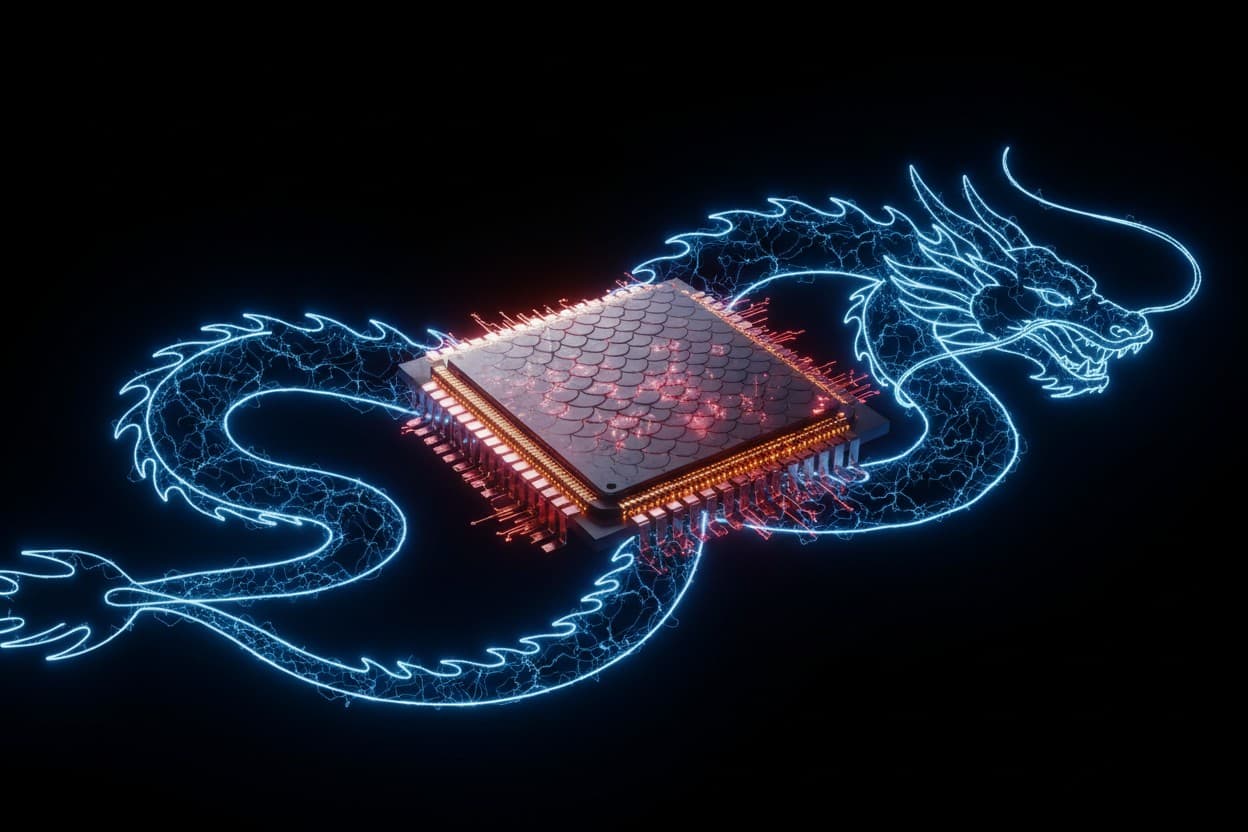
DeepSeek, a Chinese AI company, is reportedly in the early stages of developing its own in-house AI chip, a move that could significantly alter its operational landscape and the broader AI industry. According to a recent report by Reuters, the development of a competitive chip is expected to take years, and DeepSeek has declined to provide further comments on the matter. This initiative aligns with a growing trend among AI model developers who are increasingly looking to control their compute stacks as they transition from training environments to mass-market deployment.
The significance of this development cannot be understated. DeepSeek gained international attention in early 2025 when its free chatbot surpassed ChatGPT in Apple's app store, leading to a staggering $593 billion loss in Nvidia's market capitalization in just one day. As DeepSeek embarks on this ambitious project, it also places additional pressure on Huawei, a company that has previously benefited from U.S. export controls that restricted Chinese firms from acquiring Nvidia's most advanced AI chips.
DeepSeek's In-House Chip Development
DeepSeek's chip design efforts are still in their infancy, with no publicly available timeline for when the chip might be deployed. The company is part of a broader industry movement toward custom silicon, which aims to optimize hardware for specific tasks. The focus of DeepSeek's chip is expected to be on inference, which is the process of using trained AI models to generate responses, rather than on training those models. The demand for inference capabilities is surging as chatbots and AI tools become more widely adopted.
Creating a competitive chip from scratch typically involves years of engineering work and substantial financial investment. Previously, DeepSeek was reported to have utilized several thousand banned Nvidia Blackwell chips that were smuggled into China to aid in the development of its next major model. Additionally, the company has faced accusations from Anthropic for allegedly creating over 24,000 fake accounts to extract training data from its Claude model. These allegations have attracted scrutiny from U.S. lawmakers, who have accused Nvidia of providing technical support to DeepSeek that could potentially aid China’s military efforts.
Industry-Wide Trend Toward Custom AI Chips
DeepSeek's strategy reflects a larger trend within the AI industry, where companies such as Meta Platforms, Microsoft, OpenAI, and Anthropic are also investing in the development of in-house chips. This shift is largely driven by the understanding that general-purpose chips from Nvidia are optimized for training AI models but may not be the most cost-effective solution for the high-volume, low-latency demands of inference at scale. Nvidia's CEO, Jensen Huang, has warned that the United States risks falling behind China in the AI race due to excessive regulations and higher energy costs. He argues that lower energy costs and a more innovation-friendly regulatory environment in China provide a competitive edge.
China is actively pursuing a self-sufficient tech ecosystem, particularly in the semiconductor sector. A recent survey by Bloomberg Intelligence found that Chinese executives plan to allocate 46% of their AI accelerator budgets to domestic infrastructure over the next year, up from 30% currently. This indicates a growing commitment to replacing foreign semiconductors with locally produced alternatives. Domestic suppliers like Huawei and Hygon are likely to benefit from this shift, as Beijing's efforts to reduce dependence on Nvidia and other foreign chipmakers gain traction.
Market reactions to these developments have been notable. Following the Reuters report, Nvidia's shares fell approximately 2% on July 7, although the stock remains up about 5% year-to-date. However, it is still around 17% below its peak in May, as investors reassess the long-term risks associated with AI model developers creating their own compute stacks and China's push for domestic alternatives. The trend of using low-cost models, known as token-maxxing, has accelerated the global adoption of Chinese AI solutions, with data showing an increasing share of developer usage for Chinese models.
Why it matters
DeepSeek's decision to develop its own AI chip represents a strategic move to enhance supply chain independence and reduce costs as the AI industry continues to evolve. The company's rapid ascent, marked by the release of its R1 model in early 2025 and now its pursuit of custom hardware, highlights the intensifying competition in the AI sector. If DeepSeek succeeds in its chip development, it could not only diminish its reliance on Nvidia and Huawei but also serve as a signal to other AI developers that in-house chip design is a feasible pathway.
The potential ripple effects of this initiative could significantly reshape the semiconductor landscape, challenging Nvidia's near-monopoly and bolstering China's domestic tech ecosystem. As U.S. policymakers deliberate on export controls and chip security, the market is already adjusting to the reality of a multi-polar AI chip market. While the outcomes of DeepSeek's chip development may take years to materialize, the strategic direction is evident: vertical integration is increasingly becoming the norm in the AI industry.
Frequently asked questions
- What is DeepSeek's new project?
- DeepSeek is in the early stages of developing its own in-house AI chip, focusing on optimizing hardware for inference.
- Why are companies moving towards custom AI chips?
- Companies are pursuing custom AI chips to reduce infrastructure costs and gain more control over their compute stacks for specific tasks.
- How is this development affecting Nvidia?
- Nvidia's stock has seen fluctuations as investors reassess the long-term risks of AI developers creating their own chips and the growing competition from Chinese firms.
Related stories
AI & art news in your inbox, daily
The day's top stories, summarized. Free, no spam, unsubscribe anytime.