
Building AI models that understand chemical principles
Mit.edu · View original source
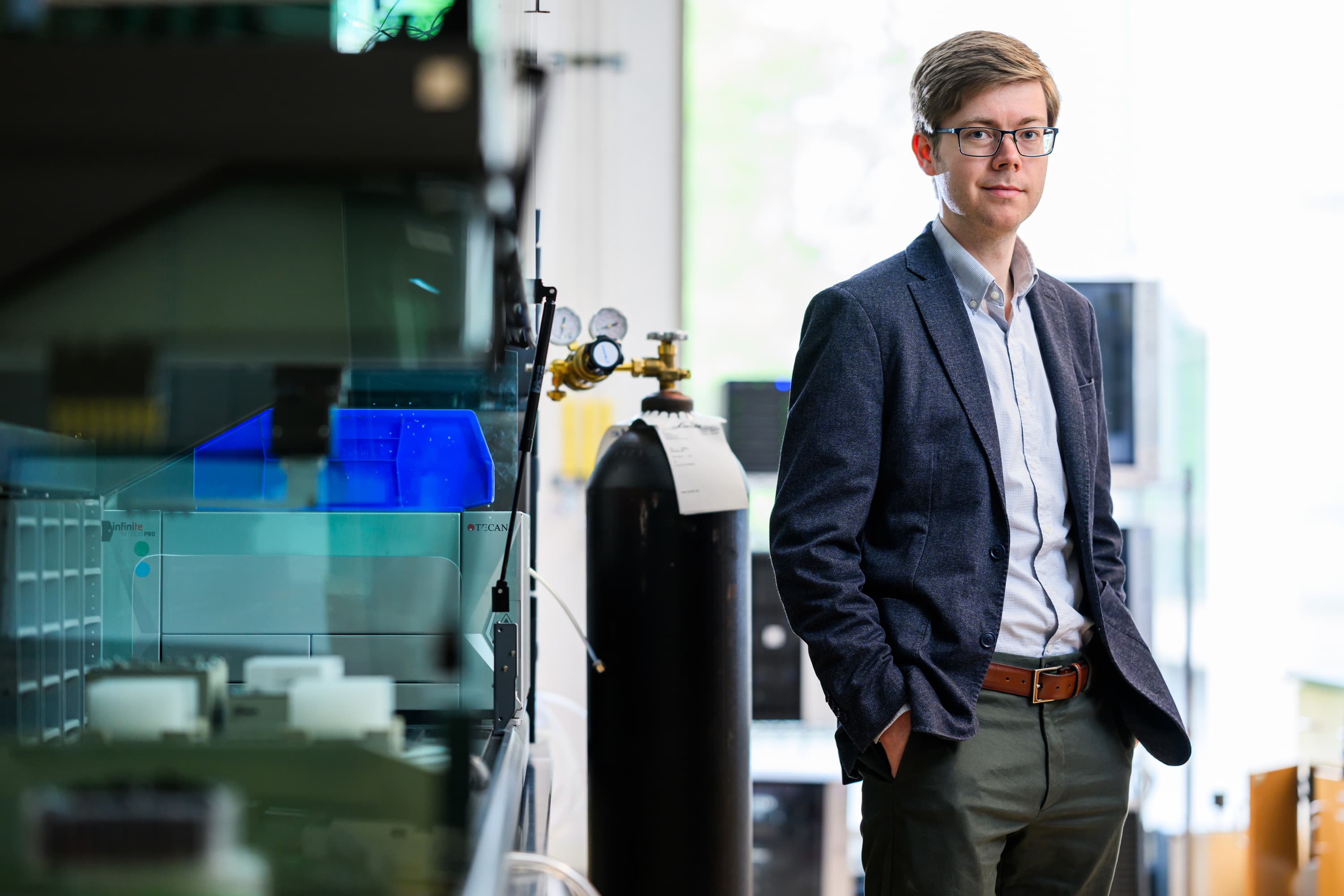
In the realm of drug discovery, the sheer volume of potential chemical compounds is staggering, with estimates suggesting that between 10^20 and 10^60 could serve as candidates for small-molecule drugs. Given the impracticality of evaluating each compound through traditional experimental methods, researchers are increasingly turning to artificial intelligence (AI) to streamline the identification of viable drug candidates. One notable figure in this transformative field is MIT Associate Professor Connor Coley, who is pioneering the integration of AI into chemical engineering and drug discovery.
The Intersection of AI and Chemistry
Coley, who holds joint appointments in the departments of Chemical Engineering and Electrical Engineering and Computer Science, as well as at the MIT Schwarzman College of Computing, is at the forefront of developing computational models that analyze vast datasets of chemical compounds. His work aims to not only design new compounds but also predict reaction pathways that could yield these compounds. "It’s a very general approach that could be applied to any application of organic molecules, but the primary application that we think about is small-molecule drug discovery," Coley states, emphasizing the versatility of his research.
Coley's journey into the world of science began early, influenced by a family of scientists. His background includes a father who is a radiologist, a mother with a degree in molecular biophysics and biochemistry, and a grandmother who was a math professor. This familial inclination towards science shaped his academic path, leading him to participate in Science Olympiad competitions during high school in Dublin, Ohio, where he graduated at the age of 16. He subsequently enrolled at Caltech, choosing chemical engineering as his major to merge his interests in science and mathematics.
During his time at Caltech, Coley also explored computer science, working in a structural biology lab where he utilized the Fortran programming language to help elucidate protein crystal structures. His passion for chemical engineering led him to MIT in 2014 to pursue a PhD, where he focused on optimizing automated chemical reactions. Under the guidance of professors Klavs Jensen and William Green, Coley combined machine learning with cheminformatics—the computational analysis of chemical data—to devise reaction pathways for new drug molecules. This work was partly funded by a DARPA initiative called Make-It, which aimed to leverage machine learning and data science to enhance the synthesis of medicines from basic building blocks.
Advancements in Drug Discovery
Coley's academic career took a significant leap when he accepted a faculty position at MIT at the age of 25. Despite mixed opinions on the merits of remaining at the same institution for both graduate and faculty roles, he recognized the unique resources and collaborative environment at MIT as invaluable. "MIT is a very special place in terms of the resources and the fluidity across departments," he explains, highlighting the institution's commitment to fostering the intersection of AI and science.
After deferring his faculty position for a year to gain experience at the Broad Institute, Coley focused on identifying small molecules from extensive DNA-encoded libraries that could interact with mutated proteins linked to various diseases. Upon returning to MIT in 2020, he established his lab with the mission of utilizing AI not only to synthesize existing therapeutic compounds but also to innovate new molecules with desirable properties.
Coley's lab has made significant strides in developing computational methods tailored to the challenges of chemistry. One notable model, ShEPhERD, evaluates potential drug molecules based on their interactions with target proteins, taking into account the three-dimensional shapes of these molecules. This model has garnered interest from pharmaceutical companies seeking to enhance their drug discovery processes.
In another innovative project, the lab created a generative AI model named FlowER, designed to predict the products of chemical reactions based on varying inputs. This model incorporates fundamental physical principles, such as the law of conservation of mass, while also considering the feasibility of intermediate reaction steps. Coley notes, "Thinking about those intermediate steps, the mechanisms involved, and how the reaction evolves is something that chemists do very naturally," underscoring the importance of grounding machine learning models in established chemical principles.
Why it matters
The implications of Coley's research extend far beyond the academic realm, offering significant advancements for both creators and technologists in the fields of AI and chemistry. By integrating AI with chemical principles, researchers can enhance the efficiency and accuracy of drug discovery processes, potentially leading to faster development of new therapies. This intersection not only opens new avenues for innovation in medicinal chemistry but also encourages collaboration across disciplines, fostering an ecosystem where technology and science can thrive together.
Moreover, the emphasis on grounding AI models in chemical understanding signifies a shift towards more reliable and interpretable AI applications in science. As creators and technologists continue to explore the capabilities of AI, the work being done in Coley's lab serves as a critical reminder of the need for models that reflect the complexities of real-world chemistry, ultimately paving the way for breakthroughs in drug discovery and beyond.
Frequently asked questions
- What is the role of AI in drug discovery?
- AI helps streamline the identification of potential drug candidates from vast numbers of chemical compounds, making the process more efficient.
- Who is Connor Coley?
- Connor Coley is an MIT Associate Professor specializing in the intersection of chemical engineering and computer science, focusing on AI applications in drug discovery.
- What are ShEPhERD and FlowER?
- ShEPhERD is a model that evaluates potential drug molecules based on their interactions with proteins, while FlowER predicts reaction products from different chemical inputs.
Related stories
AI & art news in your inbox, daily
The day's top stories, summarized. Free, no spam, unsubscribe anytime.