
Bringing AI-driven protein-design tools to biologists everywhere
Mit.edu · View original source
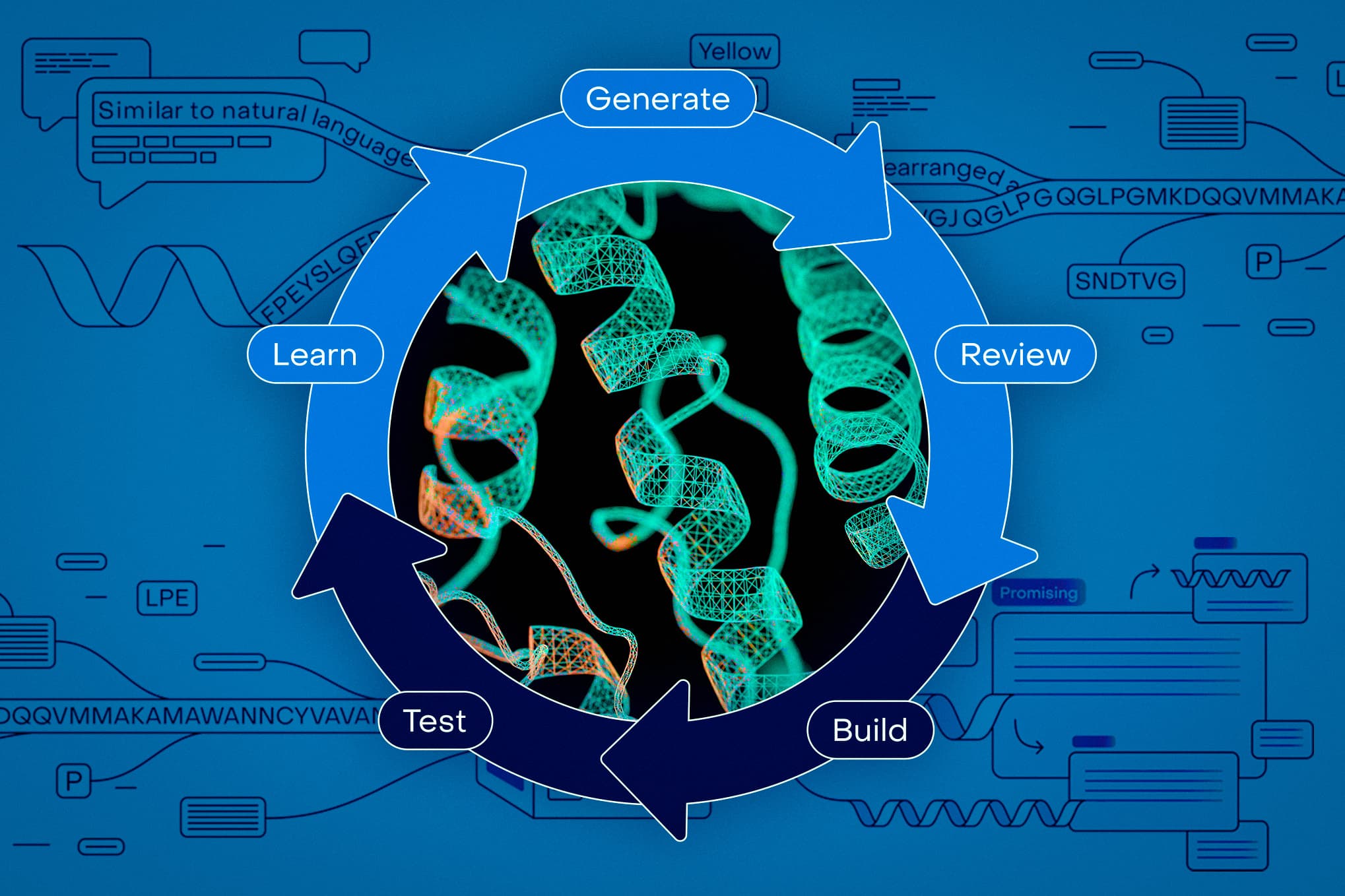
Artificial intelligence (AI) is making significant strides in drug development and enhancing our understanding of various diseases. However, for AI to translate into novel treatments, it is crucial to equip scientists with the latest and most advanced models. OpenProtein.AI, a company founded by Tristan Bepler and Tim Lu, is addressing this need by providing a no-code platform that democratizes access to powerful AI tools for protein design, structure prediction, and model training.
The founders of OpenProtein.AI, Bepler, who completed his PhD in 2020, and Lu, a former MIT associate professor, recognized that many scientists lack expertise in machine learning. Their platform aims to bridge this gap by offering user-friendly access to sophisticated foundation models specifically tailored for protein engineering. This initiative is particularly beneficial for researchers in both academia and the biotech industry, as OpenProtein.AI provides its tools to academic scientists at no cost.
The Foundation of OpenProtein.AI
Bepler's journey into the world of AI and protein design began during his time at MIT, where he was part of the Computational and Systems Biology PhD Program. Under the mentorship of Bonnie Berger, Bepler became acutely aware of the limitations in our understanding of biomolecules and proteins. He realized that the existing predictive models were inadequate for accurately forecasting the behavior of complex biological systems, such as genome circuits or protein interaction networks.
His initial research focused on predicting protein structures by analyzing evolutionary data, a pursuit that gained momentum with the release of Google’s AlphaFold, a groundbreaking model for protein structure prediction. This work ultimately led to the development of a generative AI model designed for understanding and creating proteins, which the team refers to as a protein language model.
Bepler’s excitement about the intricate relationships between protein sequences, structures, and functions fueled his desire to explore how AI could streamline the protein engineering process. After earning his PhD, he continued his research in Lu's lab, where they identified a significant disconnect between advanced AI tools and the biologists eager to utilize them. This realization laid the groundwork for the creation of OpenProtein.AI, which aims to broaden access to these powerful resources.
Features of the OpenProtein Platform
OpenProtein.AI’s platform is designed with an intuitive web interface that allows biologists to upload data and conduct protein engineering without needing extensive coding skills. The platform includes a variety of open-source models, notably PoET (Protein Evolutionary Transformer), which is capable of generating related protein sequences based on evolutionary constraints. This model can integrate new information without requiring retraining, enabling researchers to enhance the model with their experimental data.
Researchers can leverage the platform to design proteins more efficiently, identifying promising candidates for laboratory testing. The ability to input existing proteins and generate new variants with similar properties significantly accelerates the research process. Furthermore, the platform offers both a no-code front-end for general users and APIs for those who prefer to engage with the system programmatically.
Since its inception, OpenProtein.AI has continuously expanded its toolkit, ensuring that researchers, regardless of their institutional resources, can access cutting-edge protein design tools. Bepler emphasizes that the platform is not limited to specific protein functions or classes, as the models are adept at understanding the broader landscape of protein possibilities.
Collaborations and Future Directions
OpenProtein.AI has already made a mark in the pharmaceutical industry, with Boehringer Ingelheim adopting its platform for protein engineering aimed at treating diseases such as cancer and autoimmune conditions. The collaboration has recently been enhanced, integrating OpenProtein’s models into Boehringer Ingelheim’s workflows.
In 2022, the company released an updated version of its protein language model, PoET-2, which outperforms larger models while requiring significantly fewer computing resources and experimental data. Bepler and Lu are committed to advancing the understanding of proteins, focusing on how to describe them meaningfully and incorporate evolutionary constraints into their designs.
Looking ahead, the founders aim to develop models that account for the dynamic and interconnected nature of protein functions, moving beyond static interactions to predict how proteins can engage in multiple biological mechanisms simultaneously. Lu, who now serves in an advisory capacity, emphasizes the importance of creating open ecosystems around AI and biology, warning against the concentration of AI resources that could hinder accessibility for the average researcher.
As the field of AI continues to evolve, OpenProtein.AI remains dedicated to empowering scientists with the tools necessary to accelerate the development of new treatments, ensuring that advancements in AI benefit the broader scientific community.
Frequently asked questions
- What is OpenProtein.AI?
- OpenProtein.AI is a company that offers a no-code platform for protein design, allowing scientists to access advanced AI tools without needing extensive machine learning expertise.
- Who founded OpenProtein.AI?
- OpenProtein.AI was founded by Tristan Bepler and Tim Lu, both of whom have strong academic backgrounds in computational biology and engineering.
- What is PoET?
- PoET, or Protein Evolutionary Transformer, is a flagship protein language model developed by OpenProtein.AI that generates related protein sequences based on evolutionary data.
Related stories
AI & art news in your inbox, daily
The day's top stories, summarized. Free, no spam, unsubscribe anytime.