
Avnet and Weston Robot Bring Physical AI to Industrial Operations with Autonomous Inspection Robot
Antaranews.com · View original source
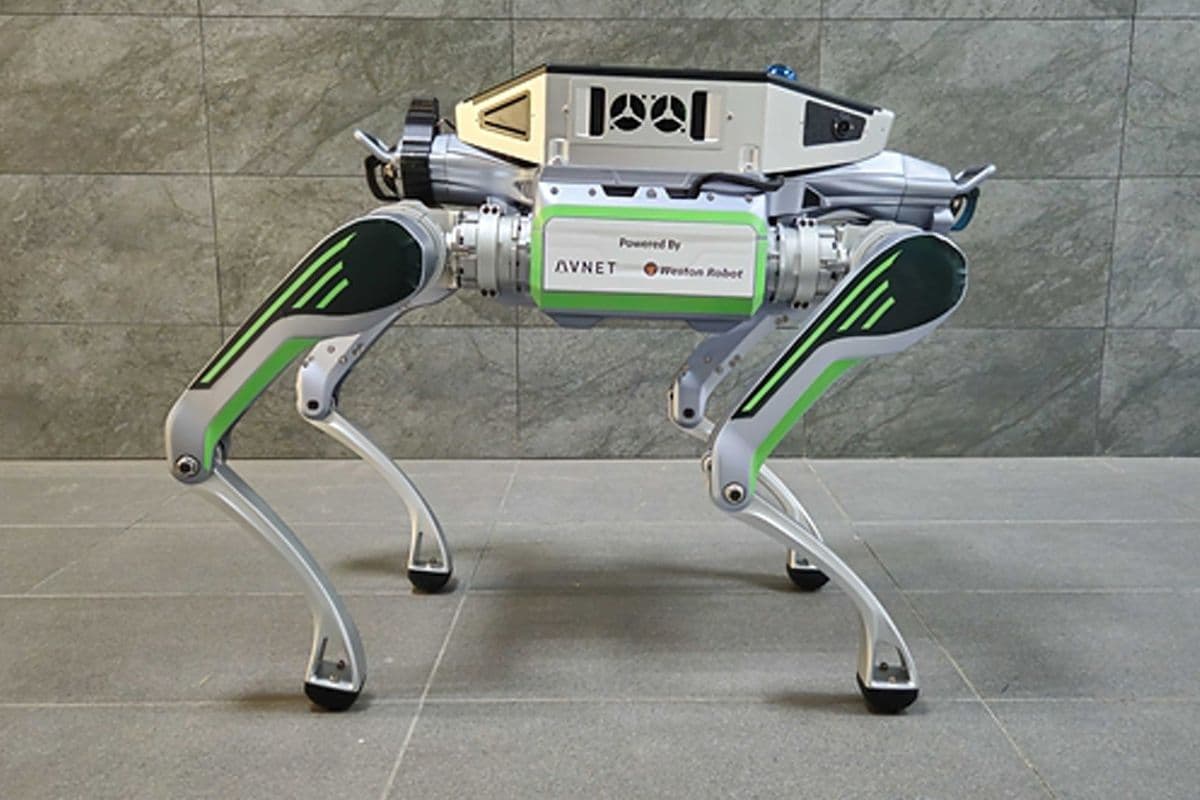
Avnet and Weston Robot have announced a strategic collaboration aimed at transforming industrial operations through the integration of Physical AI, specifically with the launch of an AI-powered inspection platform. This innovative solution is designed to enhance safety, efficiency, and operational resilience in various industrial environments, marking a significant step forward in the application of artificial intelligence beyond traditional software solutions.
The collaboration comes at a time when industrial facilities are becoming increasingly complex and data-driven. Organizations are seeking advanced systems that can not only automate but also intelligently monitor operations, identify potential risks, and respond in real-time. By combining Avnet's expertise in advanced computing technologies with Weston Robot's leadership in intelligent robotics, the two companies have developed a platform that showcases how AI can facilitate autonomous actions in the physical world.
The Technology Behind the Inspection Platform
Central to this inspection platform is the use of AMD Ryzen™ AI Embedded processors, which allow for the execution of AI workloads directly on the device. This capability is crucial for enabling low-latency AI inference, which leads to faster decision-making and reliable operations, even in environments where cloud connectivity may be limited. By processing data at the edge—meaning the data is analyzed close to where it is collected rather than being sent to a central server—organizations can detect operational issues earlier, thereby reducing inspection costs and enhancing operational continuity.
The inspection platform is tailored for use in various sectors, including manufacturing, energy, utilities, transportation, logistics, and critical infrastructure. Its intelligent inspection capabilities encompass a range of functions such as object and anomaly detection, monitoring compliance with personal protective equipment (PPE), unauthorized intrusion detection, and conducting thermal and visual inspections. These features are designed to identify potential issues like hotspots, fluid leaks, and equipment abnormalities before they escalate into costly operational failures.
One of the standout features of the autonomous inspection robot is its ability to operate effectively in challenging industrial environments where GPS signals may be weak or non-existent. Utilizing advanced 3D LiDAR technology for simultaneous localization and mapping (SLAM), the robot can continuously create high-precision digital maps, navigate autonomously, avoid obstacles in real-time, and optimize its inspection routes. This level of sophistication enables deployment across a variety of mission-critical environments, including factories, warehouses, ports, and tunnels.
Implications for the Future of Industrial Operations
The collaboration between Avnet and Weston Robot signifies a pivotal moment in the evolution of industrial automation. As Arthur Chung, Vice President of Sales & Supplier Management at Avnet Asia, noted, Physical AI represents the next evolution of artificial intelligence, where intelligent systems are capable of perceiving, reasoning, and acting autonomously in real-world scenarios. This shift from AI experimentation to practical application will be essential for organizations aiming to enhance their operational capabilities.
Dr. Zhang Yanliang, Chief Scientist at Weston Robot, emphasized the challenges faced by traditional inspection processes, which often remain manual, reactive, and resource-intensive. By integrating robotics, AI, and edge computing, the new platform aims to create a new generation of intelligent systems that can continuously monitor critical infrastructure, detect anomalies earlier, and provide actionable insights in real-time. The expectation is that Physical AI will become a foundational technology for the next generation of industrial operations, enabling organizations to achieve higher levels of safety and efficiency.
As industries continue to invest in intelligent automation, this collaboration exemplifies the growing convergence of robotics, edge computing, and artificial intelligence. The ability to move Physical AI from concept to deployment will empower organizations to implement intelligent systems that can autonomously observe, understand, and act within real-world industrial environments. This advancement not only enhances operational efficiency but also significantly improves safety standards across various sectors.
In conclusion, the partnership between Avnet and Weston Robot is a noteworthy development in the realm of industrial automation. By leveraging cutting-edge technology and innovative approaches, they are setting the stage for a future where intelligent autonomous systems play an integral role in the operational landscape of industries worldwide.
Frequently asked questions
- What is Physical AI?
- Physical AI refers to intelligent systems that can perceive, reason, and act autonomously in the real world, moving beyond traditional software applications.
- How does the inspection platform improve operational efficiency?
- The platform enhances operational efficiency by enabling real-time monitoring and anomaly detection, allowing organizations to address issues before they escalate.
- What sectors can benefit from this technology?
- The technology is designed for various sectors including manufacturing, energy, utilities, transportation, logistics, and critical infrastructure.
Related stories
AI & art news in your inbox, daily
The day's top stories, summarized. Free, no spam, unsubscribe anytime.