
ASUS Ascent GX10: The Desktop AI Box That Wins By Not Racing
PCMag.com · View original source
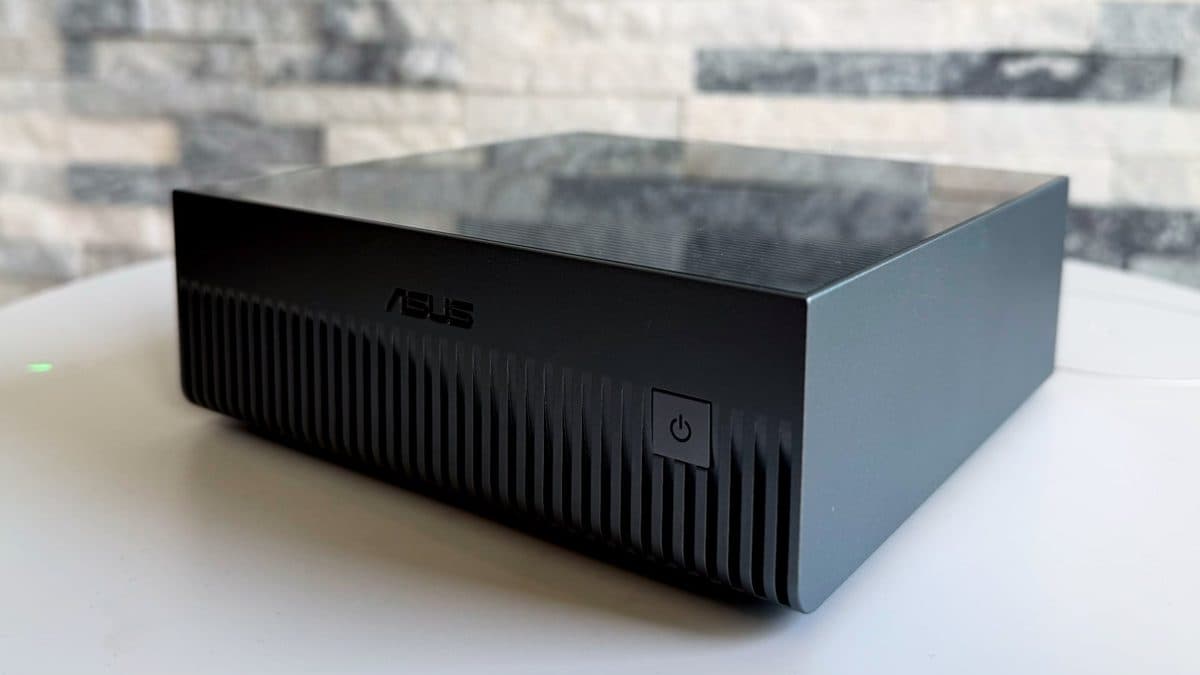
The ASUS Ascent GX10 has emerged as a noteworthy contender in the realm of desktop AI systems, particularly for those focused on running large language models. Unlike traditional high-performance computing setups that often prioritize sheer speed, the GX10 distinguishes itself through its unique architecture and memory capabilities. Central to its design is a memory bandwidth figure of 273GB/s, which plays a critical role in determining how effectively the machine processes complex AI tasks. This analysis delves into the specifications, performance metrics, and practical implications of the ASUS Ascent GX10, providing insights for creators and technologists alike.
Understanding the Specifications
At its core, the ASUS Ascent GX10 is built on NVIDIA's DGX Spark platform, featuring a 20-core Arm CPU coupled with a Blackwell-generation GPU. This combination is housed within a compact chassis measuring 150mm square and weighing 1.48kg, roughly equivalent to a hardback book. The system is equipped with 128GB of unified LPDDR5x memory, which is a significant departure from conventional setups where the GPU's VRAM acts as a limiting factor. In the GX10, the GPU can access the full 128GB of memory, allowing for more flexibility in running larger models.
The GX10 operates on DGX OS, an Ubuntu derivative, and connects through advanced networking options, including ConnectX-7 technology that supports high-speed data transfer. Notably, the GX10 lacks traditional USB-A ports and a 3.5mm audio jack, emphasizing its design as a networked appliance rather than a standard desktop computer. This design choice is further reinforced by the presence of two QSFP cages, enabling the connection of multiple GX10 units to create a larger memory pool, which is particularly beneficial for running extensive AI models.
Performance Testing and Results
In testing the GX10, a variety of local large language models were run using the Ollama framework. The models chosen varied in architecture and size, allowing for a focused evaluation of the machine's performance. The results highlighted a critical insight: the architecture of the model significantly influences processing speed. For instance, the 120-billion-parameter model demonstrated a processing speed of 44.06 tokens per second, while a smaller dense model with 32 billion parameters only achieved 10.06 tokens per second. This disparity underscores the importance of memory bandwidth in AI processing, as the GX10's high bandwidth allows it to efficiently manage the data flow required for generating tokens.
When compared to a Windows machine equipped with an ASUS ProArt RTX 5090, the GX10's performance varied. The RTX 5090 outperformed the GX10 in terms of raw speed across all models that fit within its 32GB VRAM limit. However, the GX10's capability to run a 120-billion-parameter model, which the RTX 5090 cannot accommodate, presents a compelling argument for its use in specific scenarios where large models are required. Additionally, the GX10 demonstrated superior prompt processing speeds, which could be advantageous in applications that involve lengthy documents or complex queries.
Why it matters
The ASUS Ascent GX10 represents a paradigm shift in how AI workloads can be approached, particularly for creators and technologists who require the ability to run large models without relying on cloud resources. Its design prioritizes memory bandwidth and unified memory, allowing for a more efficient processing of AI tasks that can be critical in fields such as legal, medical, and editorial work, where data privacy is paramount. The ability to operate in near silence and at lower power consumption levels further enhances its appeal for desktop use.
However, potential buyers should weigh their specific needs against the GX10’s capabilities. While it excels in handling large models, it is not the fastest option for smaller tasks that can fit within the VRAM of consumer-grade graphics cards. For those whose work involves frequent interactions with extensive datasets or models, the GX10 offers a unique solution that is not readily available elsewhere in the market. Conversely, for users focused on speed and efficiency with smaller models, traditional GPUs may still be the preferred choice.
In conclusion, the ASUS Ascent GX10 is not merely a powerful desktop AI box; it is a thoughtfully designed appliance tailored for specific use cases in the AI landscape. Its unique strengths make it a valuable asset for those who need to run large language models locally while maintaining control over their data and processing environment.
Frequently asked questions
- What is the memory bandwidth of the ASUS Ascent GX10?
- The memory bandwidth of the ASUS Ascent GX10 is 273GB/s, which is crucial for its performance in processing AI tasks.
- How does the GX10 compare to traditional GPUs?
- The GX10 is designed to handle larger models that exceed the VRAM capacity of traditional GPUs, making it suitable for specific AI applications.
- What types of models perform best on the GX10?
- Models that utilize a mixture-of-experts architecture perform significantly better on the GX10 due to its high memory bandwidth, allowing for efficient data processing.
Related stories
AI & art news in your inbox, daily
The day's top stories, summarized. Free, no spam, unsubscribe anytime.