
AI system learns to keep warehouse robot traffic running smoothly
Mit.edu · View original source
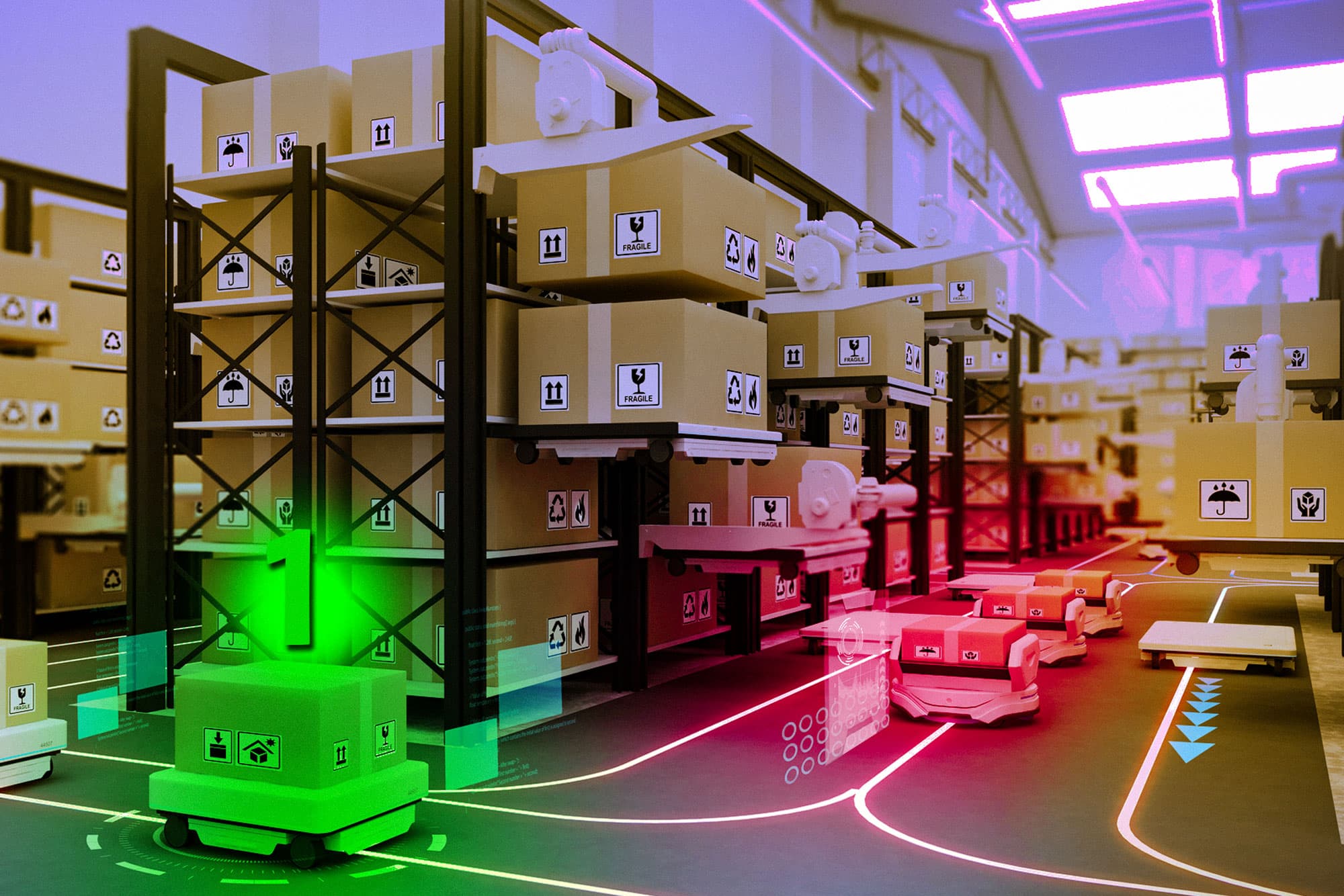
In a groundbreaking development within the realm of warehouse automation, researchers from MIT, in collaboration with the tech firm Symbotic, have unveiled a novel method designed to optimize the movement of robots in a bustling e-commerce warehouse. This innovation addresses a critical challenge: maintaining smooth traffic flow among hundreds of autonomous robots tasked with collecting and distributing items to fulfill a continuous stream of customer orders. The researchers' approach leverages advanced artificial intelligence techniques to prevent minor traffic disruptions from escalating into significant slowdowns, thereby enhancing operational efficiency.
The Mechanics of the System
The newly developed system employs deep reinforcement learning, a sophisticated AI methodology that allows machines to learn optimal behaviors through trial and error. By analyzing real-time data regarding robot movements and warehouse conditions, the system determines which robots should be prioritized at any given moment. It adapts dynamically to prevent congestion, rerouting robots preemptively to avoid potential bottlenecks.
In practical terms, this hybrid system consists of two main components: a deep reinforcement learning model that assesses the warehouse environment and a fast planning algorithm that translates the model's decisions into actionable instructions for the robots. This combination enables the robots to respond swiftly to the ever-changing dynamics of the warehouse, ensuring that operations remain fluid and efficient.
The effectiveness of this approach has been demonstrated through simulations modeled after actual e-commerce warehouse layouts. The results are promising, with the new method achieving approximately a 25 percent increase in throughput compared to traditional algorithms. This improvement is particularly significant in environments where even a small enhancement in efficiency can lead to substantial operational gains.
According to Han Zheng, a graduate student at MIT and the lead author of the research paper published in the Journal of Artificial Intelligence Research, the ability to apply deep reinforcement learning to warehouse logistics represents a significant advancement. Zheng emphasizes that traditional decision-making algorithms, often crafted by human experts, can be inadequate in dynamic settings. The new system's ability to adapt and optimize in real-time is a game-changer for the industry.
The Challenges of Robot Coordination
Coordinating the movements of hundreds of robots in a warehouse is inherently complex. The dynamic nature of such environments means that robots are continually receiving new tasks as they complete their previous ones. This necessitates rapid adjustments to their routes and priorities. In many cases, companies rely on pre-programmed algorithms that can falter in the face of unexpected congestion or collisions, sometimes necessitating a complete shutdown of warehouse operations to rectify the situation.
Zheng notes that the unpredictability of future orders and incoming packages complicates planning efforts. The MIT researchers tackled this issue by training their neural network model to prioritize robot movements based on real-time observations of the warehouse environment. The model learns to maximize throughput while minimizing conflicts through a reinforcement learning framework that rewards effective decision-making.
This innovative approach allows the system to account for both long-term constraints and immediate interactions between robots, ensuring that the entire fleet operates cohesively. Once the neural network identifies which robots should be prioritized, the planning algorithm efficiently directs their movements, facilitating quick responses to changes in the warehouse layout or task requirements.
Why it matters
The implications of this research extend beyond mere efficiency gains; they highlight a significant shift in how warehouse automation can be approached. Traditional methods often struggle to scale effectively, particularly as the density of robots increases. The MIT-Symbotic hybrid system, however, demonstrates that integrating machine learning with classical optimization techniques can yield superior results in complex environments.
As the demand for e-commerce continues to rise, the ability to manage warehouse logistics more effectively will become increasingly critical. The researchers' work not only showcases the potential of AI-driven solutions in this space but also sets the stage for future advancements. By incorporating task assignments into their system and scaling it for larger warehouses, the team aims to further enhance the operational capabilities of automated warehouses.
In conclusion, the research conducted by MIT and Symbotic represents a pivotal step forward in the field of warehouse automation. By harnessing the power of deep reinforcement learning, they have developed a system that promises to revolutionize how robots navigate complex environments, ultimately improving efficiency and productivity in the logistics sector.
Frequently asked questions
- What is deep reinforcement learning?
- Deep reinforcement learning is an advanced artificial intelligence technique that allows machines to learn optimal behaviors through trial and error by receiving feedback from their actions.
- How does the new system improve warehouse efficiency?
- The system improves efficiency by dynamically prioritizing robot movements to avoid congestion, resulting in a 25% increase in throughput compared to traditional algorithms.
- What future developments are planned for this research?
- The researchers plan to incorporate task assignments into the system and scale it for larger warehouses with thousands of robots.
Related stories
AI & art news in your inbox, daily
The day's top stories, summarized. Free, no spam, unsubscribe anytime.