
AI-Powered Holographic Display Could Bring Star Trek-Style 3D Images Closer
Hot Hardware · View original source
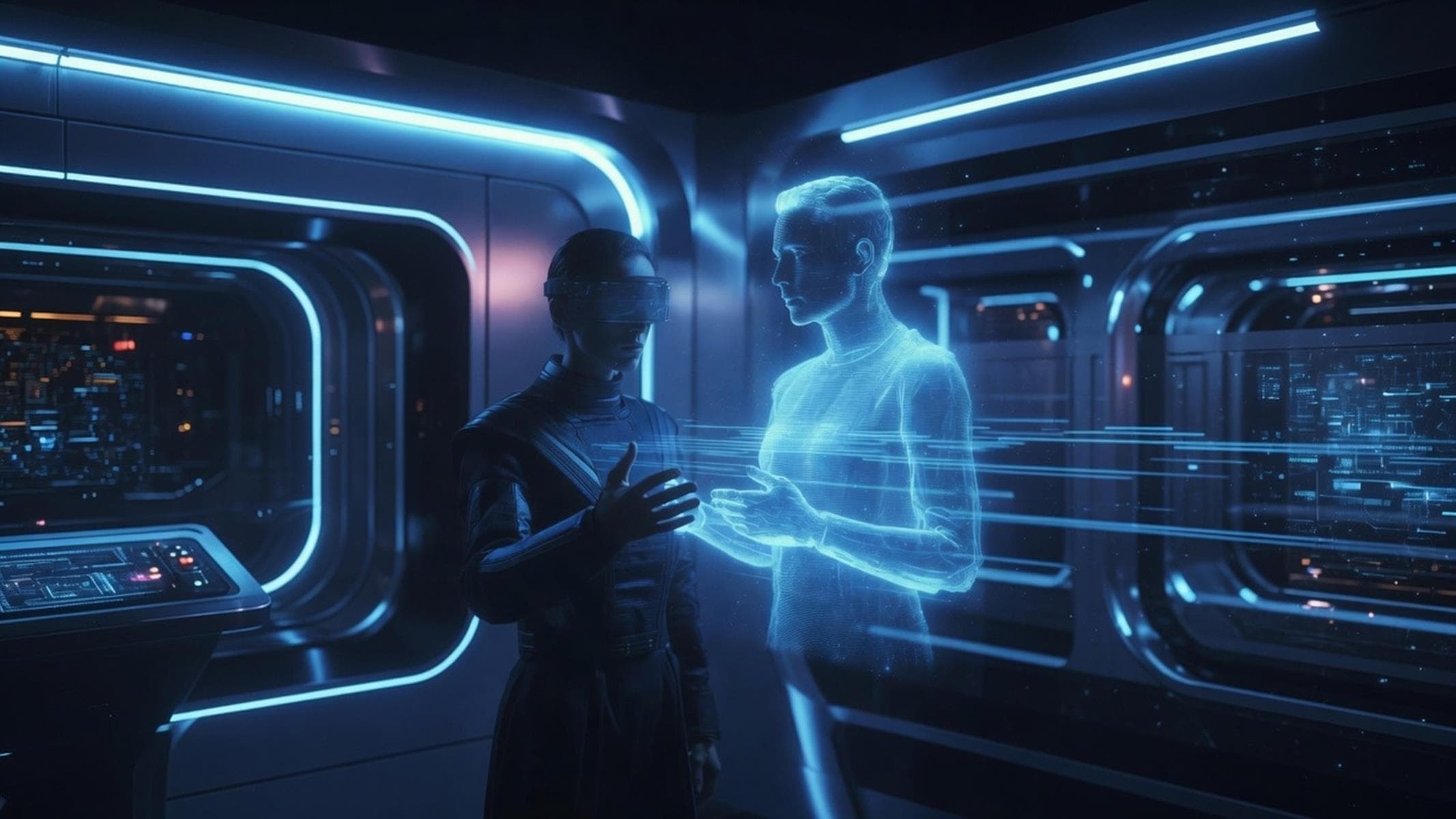
The intersection of artificial intelligence and optics has taken a significant leap forward, as researchers at the UCLA Samueli School of Engineering and the California NanoSystems Institute (CNSI) have developed a novel method for projecting complex three-dimensional (3D) scenes. This advancement could bring us closer to the kind of immersive experiences seen in science fiction, such as the holodecks of Star Trek. The study, led by Dr. Aydogan Ozcan, tackles a persistent challenge in the field of holographic displays known as dense depth multiplexing, which has long hindered the development of realistic 3D projections.
Dense depth multiplexing refers to the difficulty of creating convincing 3D images by layering multiple slices of a 3D object at varying depths. Traditionally, engineers have attempted to project these layers simultaneously, but as they become packed closer together, the light waves often interfere with one another. This interference, termed diffraction-induced cross-talk, causes blurriness and diminishes the depth perception that is crucial for a comfortable viewing experience. Previous solutions have relied heavily on computational power or time-sequential scanning methods, which assemble the image slice by slice. These approaches, while effective, can be slow and energy-intensive, making real-time 3D projection a challenge.
The UCLA team's innovative solution employs a hybrid digital-optical design that optimally divides the workload between artificial intelligence and physical optics. At the forefront of this system is a digital encoder, which utilizes a neural network to analyze the target scene across different depths. This encoder identifies features at multiple scales, assigns axial positions to each layer, and compresses the entire stack into a single phase pattern. This pattern is then processed by a diffractive decoder, a passive optical structure shaped by machine learning techniques. As light passes through these custom surfaces, the decoder effectively directs each image to its designated depth while minimizing interference between layers.
One of the key findings from the research is that simply increasing the resolution of the encoder does not suffice to achieve optimal results. Instead, it is the learned optical decoder that plays a pivotal role in separating adjacent depths, thereby enhancing the clarity of the projected images. The results from numerical simulations were impressive, demonstrating the system's capability to manage volumetric scenes composed of 28 distinct depth slices, maintaining separation between layers at distances comparable to a single wavelength of light. However, the researchers noted that the fidelity of images could diminish for layers situated deeper within the stack.
To validate their concept, the team constructed a physical prototype that operates using visible red light at a wavelength of 650 nanometers. This prototype combined the encoder and a single-layer decoder to project two depth planes, achieving results that closely mirrored their simulations. Notably, this setup outperformed a free-space configuration that lacked a decoder, showcasing the effectiveness of their approach.
The implications of this research extend beyond mere academic interest, particularly for consumer electronics. The passive nature of the diffractive decoder means it does not consume power, allowing the system to shift computational demands from the processor to the optical components. This efficiency is crucial in developing compact augmented reality (AR) and virtual reality (VR) devices, volumetric microscopy, and real-time 3D visualization technologies. However, the researchers did caution about a trade-off: while increasing brightness can enhance diffraction efficiency, it can also reintroduce unwanted speckle and cross-talk, necessitating a careful balance between brightness and image clarity.
As promising as these advancements are, the researchers emphasize that their work remains a proof of concept. Future developments will need to address multi-layer fabrication, full-color operation, and viewer-facing systems to fully realize the potential of this technology. The journey toward creating truly immersive, holographic displays is far from over, but this research marks a significant milestone in the quest for more advanced 3D imaging solutions.
Why it matters
The implications of this research are profound for creators and technologists alike. As the demand for more immersive and interactive experiences grows, advancements in holographic display technology could redefine how we engage with digital content. The ability to project realistic 3D images without the limitations of current technologies opens up new avenues for applications in gaming, education, and virtual collaboration. For creators, this means an expanded toolkit for storytelling and artistic expression, while technologists can explore innovative solutions that leverage the efficiency and capabilities of this new approach. As the line between the digital and physical worlds continues to blur, the potential for AI-powered holographic displays to transform our interactions with technology is immense.
Frequently asked questions
- What is dense depth multiplexing?
- Dense depth multiplexing is a challenge in holographic display development where multiple slices of a 3D object are projected at different depths, leading to interference and blurriness in the images.
- How does the new holographic display technology work?
- The new technology uses a digital encoder that employs a neural network to analyze and compress 3D scenes into a single phase pattern, which is then processed by a passive diffractive decoder to project clear images at various depths.
- What are the potential applications of this technology?
- Potential applications include augmented reality (AR) and virtual reality (VR) devices, volumetric microscopy, and real-time 3D visualization, which could enhance user experiences in gaming, education, and digital collaboration.
Related stories
AI & art news in your inbox, daily
The day's top stories, summarized. Free, no spam, unsubscribe anytime.