
a collection of impossible dreamscapes imagines utopia beyond reality’s limits
Designboom · View original source
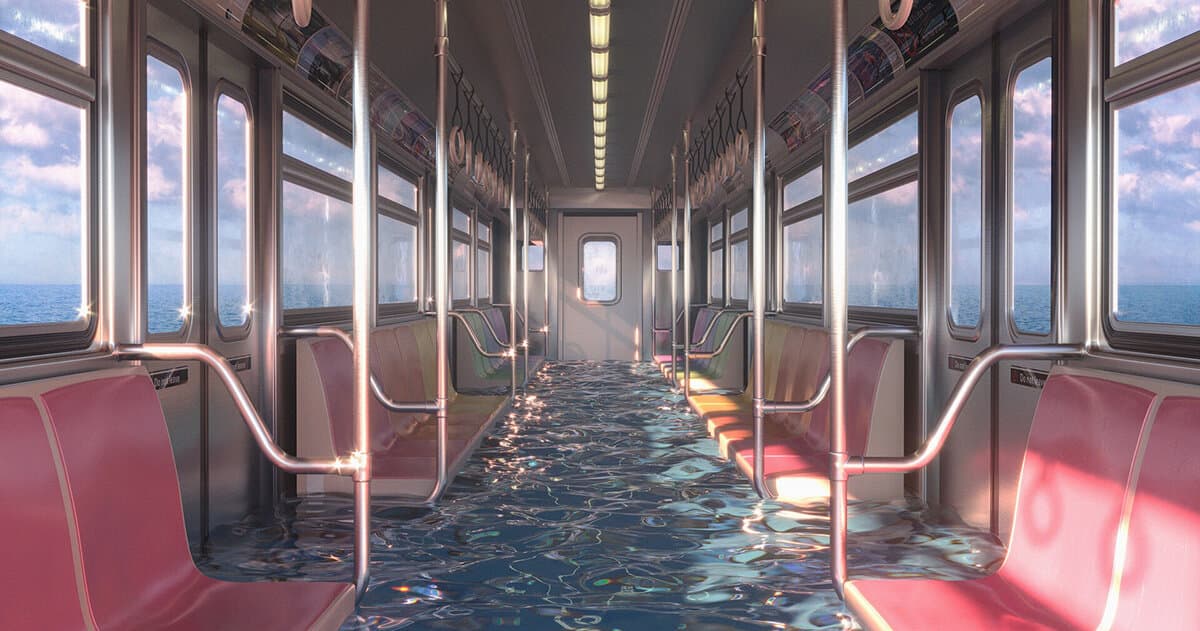
In a fascinating exploration of architectural imagination, the book "Dreamscapes & Artificial Architecture" presents a collection of visual experiences that transcend the limitations of reality. The images within this collection evoke a sense of familiarity, as viewers encounter serene pools, ethereal staircases, and subway cars bathed in sunlight and shimmering blue water. These dreamlike environments challenge conventional perceptions of space and architecture, inviting observers to engage with them on a purely imaginative level.
The Nature of Dreamscapes
At first glance, the images in "Dreamscapes & Artificial Architecture" appear to represent architectural spaces. However, as one delves deeper, it becomes clear that these are not structures meant for physical construction. Instead, they exist in a realm where gravity is optional, and scale is fluid. The collection liberates itself from the constraints of budgets, client demands, and physical realities, allowing for the creation of spaces that can only exist in the mind's eye.
Historically, renderings have served as preliminary steps toward tangible architectural projects. In contrast, the works featured in this book stand as complete creations in their own right. They do not hint at future construction; rather, they embody the final artistic vision. This shift in perspective transforms the process of creation, as these dreamscapes are designed primarily for visual impact and imaginative engagement. Light takes precedence over structural integrity, and the surfaces depicted possess a level of finish that often eludes physical materials.
Throughout the book, a consistent visual language emerges, characterized by pastel skies, reflective waters, and precise geometric forms. The intentional repetition of these elements fosters a collective atmosphere that resonates with the viewer. Each scene, with its still pools and seamlessly curved walls, presents a sense of completeness, despite their existence as mere images.
The Experience of Space
In "Dreamscapes & Artificial Architecture," space is presented as something to be comprehended instantaneously. Unlike traditional architecture, which is experienced over time, these environments invite viewers to absorb their essence in a single glance. This approach redefines the interaction with architectural imagery, shifting from a temporal experience to an immediate understanding.
Moreover, the book's spaces diverge from the conventional notion of utopia, which typically involves practical applications within the real world. Instead, these images create a platform for imaginative exploration, allowing viewers to engage with their desires and aspirations without the constraints of physical context. The absence of infrastructure and the lack of negotiation with site conditions further emphasize this imaginative freedom.
The cleanliness of these dreamscapes is striking. There are no signs of wear or traces of human activity; the spaces appear untouched and unblemished. Familiar architectural typologies, such as courtyards or subway cars, are presented in a state of suspension, devoid of the usual markers of use. This pristine quality enhances the viewer's ability to project their own experiences and desires onto the spaces, allowing for a more personal connection.
For instance, Massimo Colonna's piece, "Ambiguous," features a courtyard framed by arches that feel isolated from the outside world. Sculptural figures are captured mid-gesture, suggesting a moment frozen in time. Similarly, Ezequiel Pini's "The Circle" presents a fluid interior where furniture and architecture merge into a seamless form, further blurring the lines between structure and environment.
Other works, such as Hayden Williams's "World Underwater," maintain recognizable elements, like the subway carriage, while introducing surreal alterations, such as a flooded floor that reflects the interior. This transformation retains the legibility of the original structure while inviting viewers to experience it in an entirely new context. Simon Kämpfer's "Hidden Places" similarly juxtaposes classical architectural proportions with a soft, even light, creating a serene atmosphere that feels detached from practical use.
Why it matters
The environments depicted in "Dreamscapes & Artificial Architecture" prioritize atmosphere over action, allowing the spaces to exist independently of human interaction. The absence of people invites viewers to observe rather than participate, creating a distance that encourages mental engagement with the imagery. In this way, the images serve as vessels for imagined experiences, offering a glimpse into what architecture could be when liberated from constraints.
These works contribute to a broader discourse on utopia, exploring the potential of architectural thought when unencumbered by practical limitations. Rather than challenging existing systems or constraints, they extend the boundaries of architectural imagination, providing a fertile ground for ideas to flourish. By presenting these dreamscapes, the book encourages both creators and technologists to envision spaces that inspire and provoke thought, ultimately pushing the boundaries of what architecture can represent in the realm of dreams and aspirations.
Frequently asked questions
- What is "Dreamscapes & Artificial Architecture"?
- "Dreamscapes & Artificial Architecture" is a collection of visual works that explore imaginative architectural spaces that exist beyond the constraints of reality.
- How do the images in the book differ from traditional architectural renderings?
- Unlike traditional renderings that serve as preliminary steps toward construction, the images in this book are complete artistic visions that do not hint at future building.
- What themes are explored in the book?
- The book explores themes of utopia, imagination, and the potential of architectural thought when freed from practical limitations.
Related stories
AI & art news in your inbox, daily
The day's top stories, summarized. Free, no spam, unsubscribe anytime.